Artificial intelligence could add $1 trillion to India's GDP by 2035, according to a new report, as AI startup funding in the country doubles to $1.3 billion and the government positions AI as a strategic economic priority.
The projections, reported by Moneycontrol and other Indian business outlets, highlight the enormous economic potential of AI adoption across Indian industries — from financial services and healthcare to agriculture and manufacturing.
Also read: India economy grows at 7.8% but RBI cuts forecast
AI Startup Funding Surge
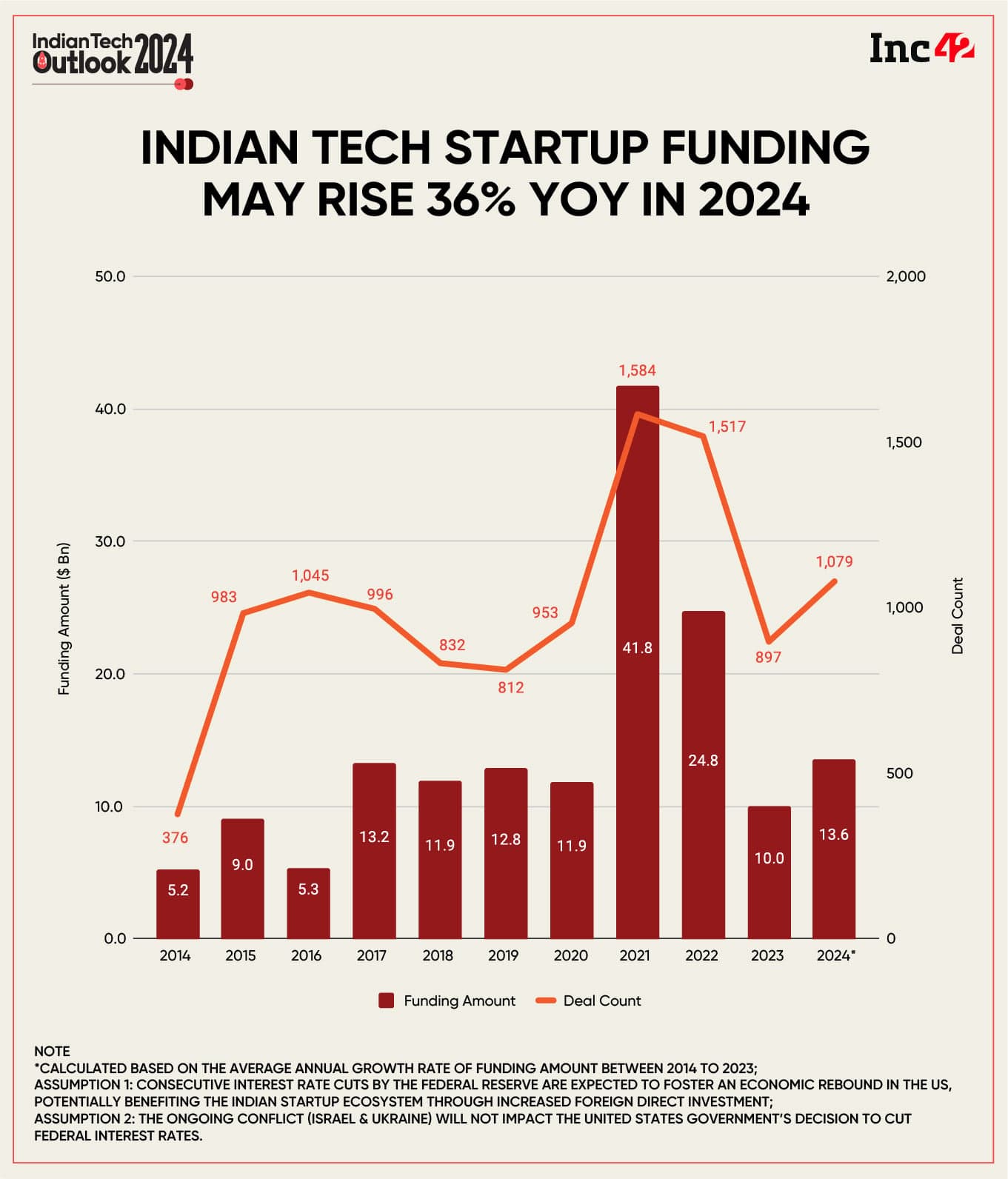
Funding for AI companies in India has doubled to $1.3 billion, reflecting growing investor confidence in the country's AI ecosystem. Major deals include Neysa raising $1.2 billion at a unicorn valuation, while AI infrastructure companies like Portkey (LLMOps) and C2i Semiconductors have also raised significant rounds.
The funding surge spans AI infrastructure, AI-enabled SaaS, healthcare AI, and fintech AI. Indian AI startups raised over $1.3 billion in a single week in February 2026 alone, led by Neysa's massive round.
This mirrors global trends where AI investment has surged following the 2022-2023 generative AI breakthrough. However, India's AI funding remains concentrated in a few large rounds, and early-stage AI startups still face challenges accessing capital compared to their US and Chinese counterparts.
Key Sectors Driving India's AI Economy
Financial services leads AI adoption in India, with banks using AI for fraud detection, credit scoring, and customer service chatbots. Healthcare AI is growing rapidly, with diagnostic imaging, drug discovery, and telemedicine platforms incorporating AI. Agriculture technology — a uniquely Indian opportunity — uses AI for crop yield prediction, soil monitoring, and supply chain optimization.
The IT services sector, India's traditional tech strength, is being reshaped by AI. Major IT firms are retraining hundreds of thousands of employees in AI skills while developing proprietary AI platforms for enterprise clients globally.
Also read: India IT giants face identity crisis as AI reshapes hiring
Government AI Push
The Indian government has launched multiple initiatives to accelerate AI adoption, including the IndiaAI Mission with a budget allocation of over ₹10,000 crore. Key pillars include AI compute infrastructure, AI marketplaces, and AI skill development programs in partnership with leading tech companies.
India's strength in AI lies in its massive digital population, growing data economy, and strong engineering talent base. However, challenges remain in compute access, research funding, and the talent gap between AI researchers and AI application developers.
Challenges to the $1 Trillion Target
Reaching $1 trillion in AI contribution by 2035 is ambitious. It would require AI adoption across every sector of the economy, not just technology. Key barriers include: limited access to AI compute (GPUs), a shortage of AI researchers relative to the US and China, regulatory uncertainty around AI governance, and the need for massive digital infrastructure investment.
Reliance's Jamnagar AI project and government initiatives like IndiaAI are designed to address the compute gap, but bridging the research and talent gaps will require sustained investment over a decade.
Sources: Moneycontrol, Inc42, NDTV Profit, Economic Times, Tracxn