A Trillion-Dollar Bet on India's AI Future
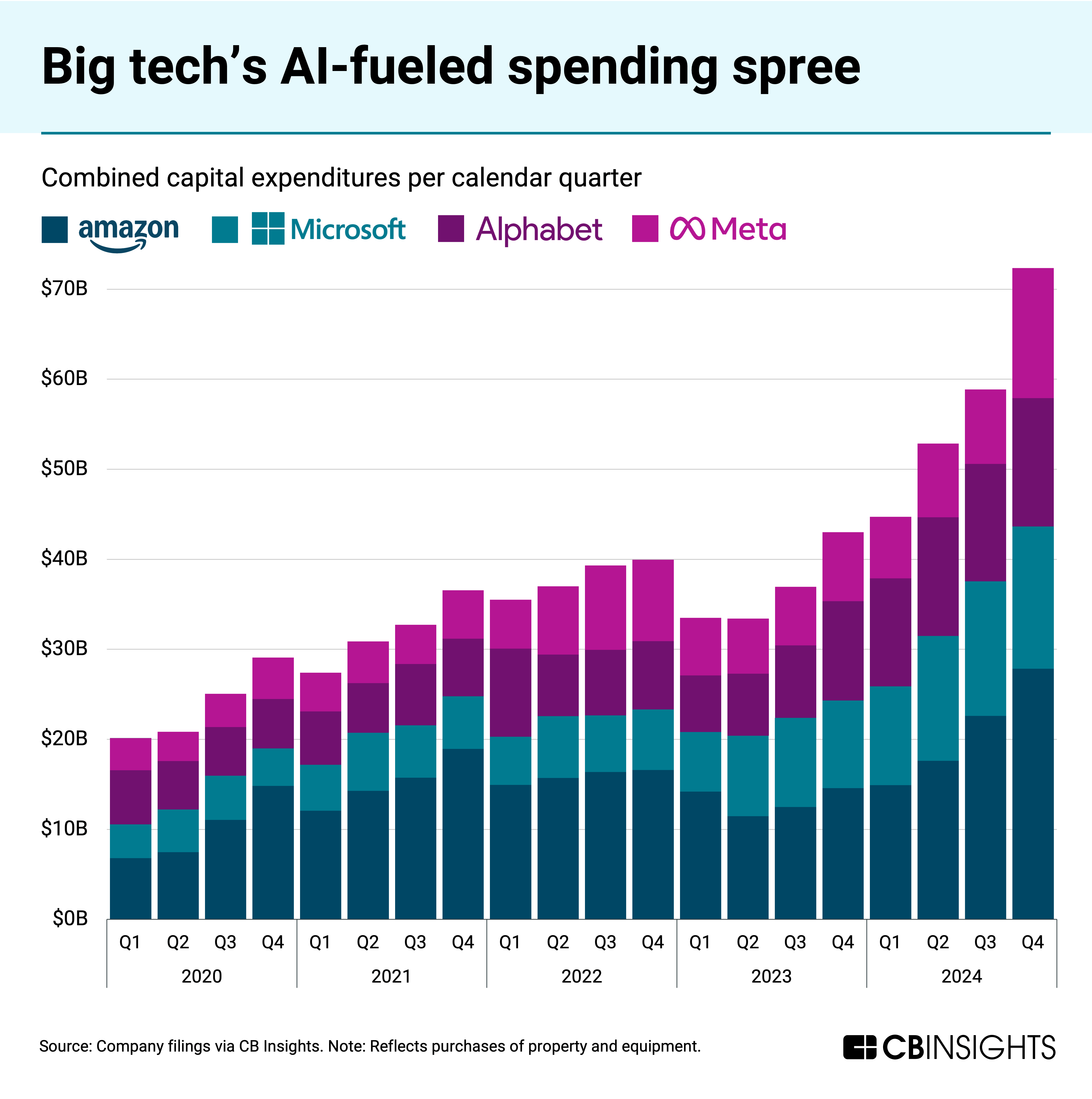
Amazon, Microsoft, and Google have collectively committed nearly $57 billion to building artificial intelligence infrastructure in India, positioning the country as one of the world's most significant data centre and AI computing hubs. The wave of investment — spanning cloud data centres, custom AI chips, managed AI services, and developer ecosystem building — reflects a strategic conviction among US technology giants that India will be central to the next phase of global AI development.
Amazon announced $48 billion for 2026-2030 (including $21 billion for AI and cloud), Microsoft committed $17.5 billion by 2029, and Google pledged $15 billion for a gigawatt-scale AI ecosystem in Visakhapatnam. Combined with other technology investments, the total US technology commitment to India's digital infrastructure has crossed $67.5 billion according to Financial Express estimates.
The Breakdown: Who Is Spending What and Where
| Company | Committed Investment | Focus Areas |
|---|---|---|
| Amazon / AWS | $48 billion (2026-2030) | AI infrastructure, cloud data centres (Mumbai, Hyderabad), e-commerce logistics, exports enablement |
| Microsoft | $17.5 billion (2026-2029) | Cloud data centres, AI infrastructure, enterprise AI solutions, skilling programmes |
| $15 billion | Gigawatt-scale AI ecosystem (Visakhapatnam), server manufacturing, drone production, AI research hub |
The combined investment is spread across the country, with AWS expanding its existing data centre regions in Mumbai and Hyderabad, Microsoft building new Azure regions in Hyderabad and Pune, and Google developing its largest campus outside the United States in Visakhapatnam, Andhra Pradesh.
What's Driving the Investment Surge
Three factors underpin the massive capital flows. First, India's domestic AI market is expanding rapidly — the country has the world's second-largest internet user base and one of the fastest-growing cloud services markets, with AWS, Azure, and Google Cloud all reporting triple-digit year-on-year growth in India. Second, India's government has aggressively courted technology investment through production-linked incentive (PLI) schemes, data centre park policies, and state-level incentives including tax holidays and subsidized power. Meta and Reliance are building a 168MW AI data centre in Jamnagar, reflecting the broader build-out of AI infrastructure across the country.
Third, and perhaps most significantly, global technology companies view India as a hedge against concentration risk in AI infrastructure. With most of the world's AI compute capacity currently located in the United States and China, geopolitical tensions and supply chain disruptions have highlighted the need for geographically distributed AI infrastructure. India, with its stable democracy, English-speaking workforce, and strong intellectual property protections, is emerging as the preferred third location.
Impact on India's AI Ecosystem
For Indian startups and enterprises, the availability of local AI infrastructure at scale is transformative. Access to AWS's custom Trainium and Inferentia AI chips, Microsoft's Azure AI-optimized infrastructure with NVIDIA H200 GPUs, and Google's TPU v5 will dramatically reduce the cost and latency of AI model training and inference. This is particularly significant for India-focused AI applications in healthcare, agriculture, financial inclusion, and vernacular language processing. India's IT industry already generates $10-12 billion in AI services revenue, and expanded local AI infrastructure is expected to accelerate this growth significantly.
The investment is also expected to create a multiplier effect across the broader economy. Each dollar of data centre investment typically generates $2-3 in downstream economic activity through construction employment, equipment manufacturing, power infrastructure, and service industry growth. The cumulative employment impact across the three companies' commitments could exceed 500,000 direct and indirect jobs over the next five years.
Challenges and Structural Gaps
Despite the optimism, significant challenges remain. India's power infrastructure, while improving, faces reliability issues that complicate the operation of power-hungry AI data centres. Water scarcity in several proposed data centre locations is also a concern, as conventional data centre cooling requires substantial water consumption. Companies are increasingly exploring liquid cooling and water-efficient designs, but these solutions add capital costs.
Talent remains another bottleneck. While India produces millions of STEM graduates annually, the pipeline of AI specialists — particularly those with experience in large-scale AI infrastructure, distributed computing, and hardware design — remains limited. The government and private sector have launched multiple skilling initiatives, but bridging the gap will take years.
Sources: TechCrunch Amazon Coverage, Moneycontrol Analysis, Financial Express Report, Amazon Official