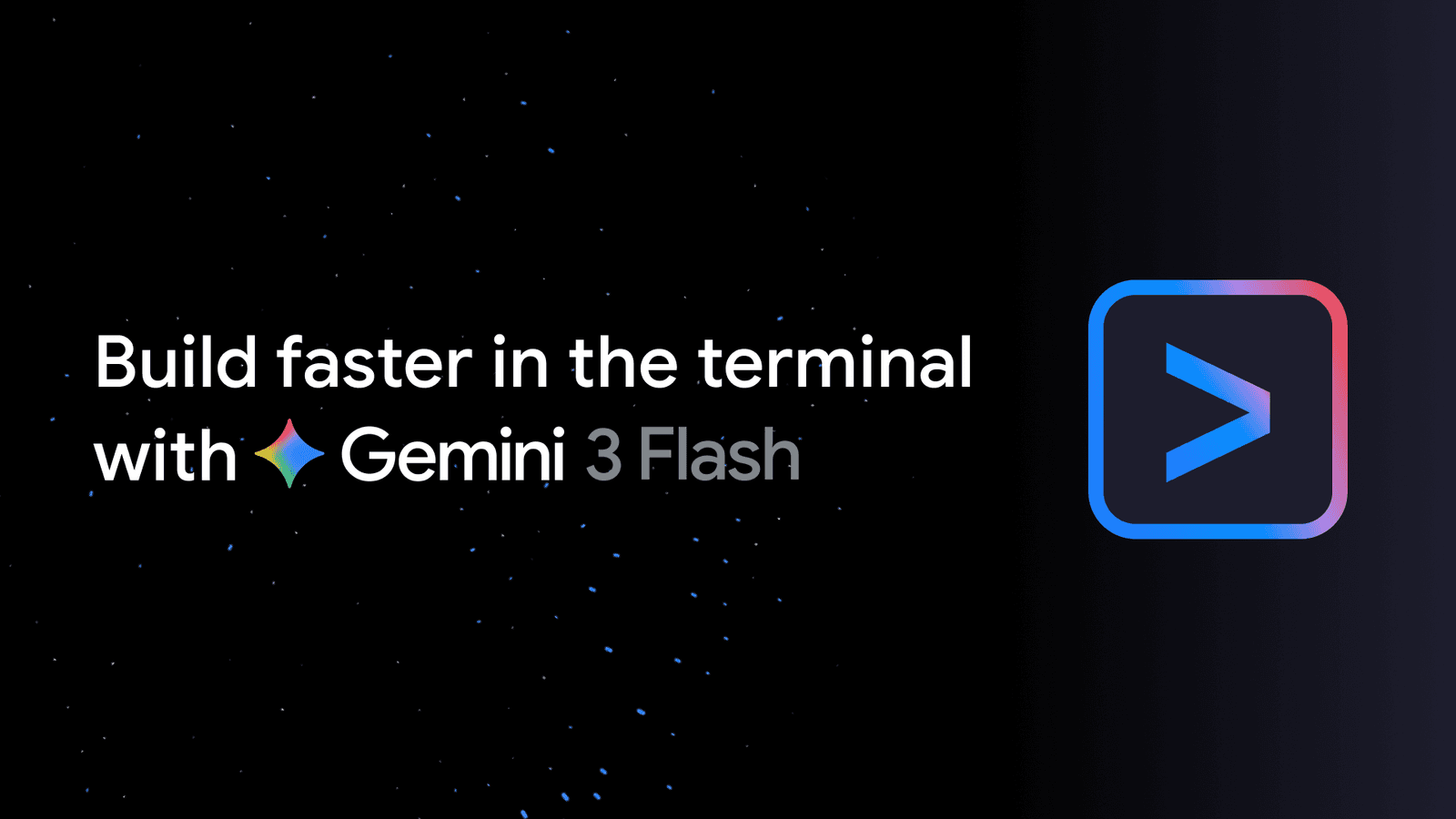
Google has announced a major upgrade to Gemini 3.5 Flash, integrating native computer use capabilities directly into the model. The update allows developers to build AI agents that can see, reason, and take action across browsers, mobile devices, and desktop applications.
Previously available only as a standalone Gemini 2.5 computer use model, the feature is now built directly into the main Gemini Flash model, simplifying development and expanding automation possibilities.
What Gemini Computer Use Can Do
With native computer use, Gemini 3.5 Flash can navigate websites, fill out forms, interact with enterprise software, execute repetitive workflows, manage research and data collection tasks, and operate tools without custom integrations. The model can observe screen content through screenshots, reason about what actions to take, and execute clicks, keystrokes, and navigation.
According to Google DeepMind product manager Mateo Quiros: "Previously only available as a standalone Gemini 2.5 computer use model, computer use is now integrated natively in the main Gemini Flash model."
Also read: DiffusionGemma: Google's open-source model generates text 4x faster
Built for the Agent Era
Gemini 3.5 Flash, introduced at Google I/O 2026, was already optimized for coding, reasoning, and autonomous task execution. The addition of native computer use makes it a complete platform for building action-oriented AI agents — systems that don't just generate responses but actually perform tasks in digital environments.
Google says 3.5 Flash is specifically optimized for long-horizon agentic tasks, making it suitable for workflows requiring planning, decision-making, and multiple sequential actions. Early use cases include continuous software testing, enterprise knowledge work, and data collection across professional applications.
Safety Measures and Enterprise Controls
To address the prompt injection risks inherent in agents operating in live environments, Google has implemented targeted adversarial training for computer use in Gemini 3.5 Flash. Additionally, two optional enterprise safeguard systems are being released: one that requires explicit user confirmation for sensitive or irreversible actions, and another that automatically stops tasks if an indirect prompt injection is identified.
Google recommends a defense-in-depth approach, encouraging developers to combine these features with secure sandboxing, human-in-the-loop verification, and strict access controls.
Also read: Google Antigravity 2.0 and Gemini 3.5 Flash: Everything from I/O 2026
India Impact and Developer Opportunity
For Indian developers and enterprises, native computer use in Gemini 3.5 Flash opens significant automation opportunities across IT services, business process outsourcing, and software testing — sectors where India has global leadership. Indian IT firms can use the capability to build automated testing pipelines, automate client onboarding workflows, and develop AI agents that interact with legacy enterprise systems.
The availability through the Gemini API and Gemini Enterprise Agent Platform means Indian startups can access enterprise-grade AI agent technology without building infrastructure from scratch. This is particularly relevant given India's $1.3 billion AI startup funding surge in 2026.
Computer use may ultimately become one of the most important AI advancements of 2026, moving AI beyond assistance into direct execution across every digital interface.
Sources: Google AI Blog, SQ Magazine, NokiaPowerUser, Mashable