Historic Summit Lays Foundation for Technology Partnership
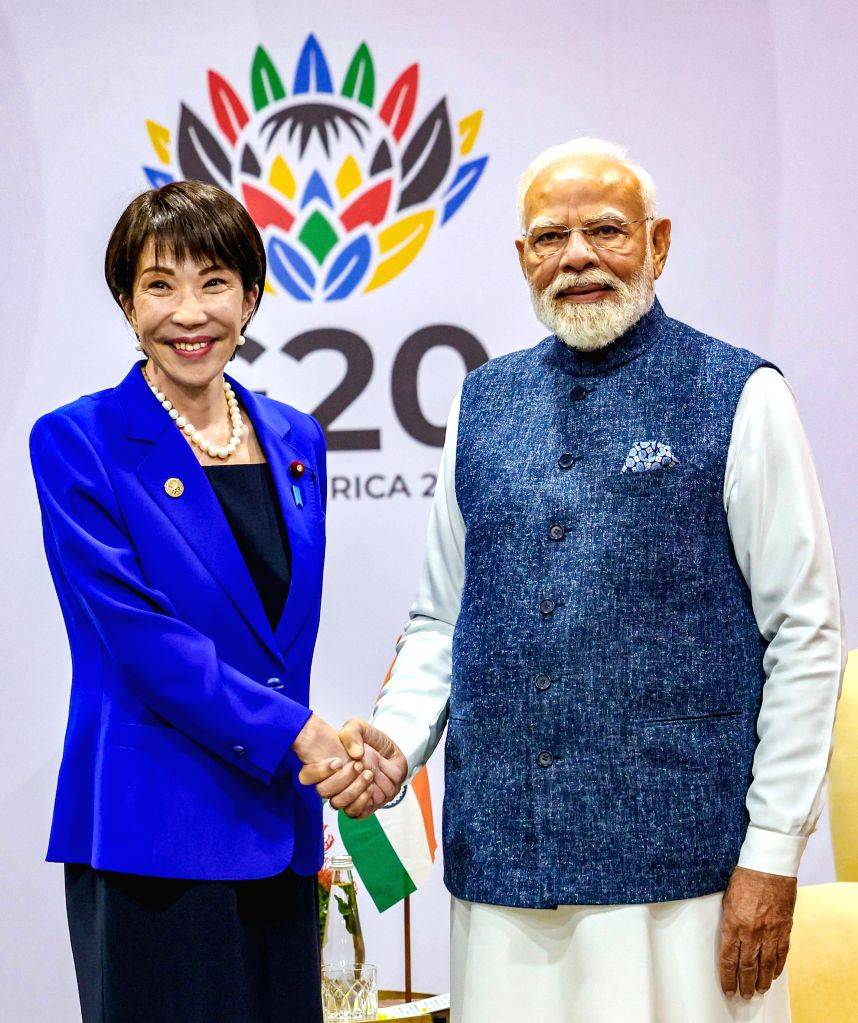
India and Japan have signed a sweeping set of agreements spanning artificial intelligence, defence, energy, and critical minerals following the 16th India-Japan Annual Summit in New Delhi, marking the most ambitious expansion of bilateral technology cooperation between the two countries. Prime Minister Narendra Modi and his Japanese counterpart Sanae Takaichi, on her first visit to India as Japan's Prime Minister, oversaw the exchange of pacts that signal a fundamental shift from traditional infrastructure partnerships toward a future defined by AI, semiconductor supply chains, and economic security.
The summit produced a joint statement on artificial intelligence, a roadmap for economic security cooperation, and the first-ever defence co-development agreement between the two nations — the Naval Radio Antenna "Unicorn." Modi described the defence project as one that would "open a new chapter in our defence technology partnership."
The agreements come at a time when both countries seek to reduce dependence on concentrated supply chains for advanced technologies and build resilient alternatives. Japan's precision engineering capabilities and India's software engineering talent are seen as naturally complementary, with the two leaders emphasising that their convergence would give "fresh momentum and strength to the global development of AI."
AI Cooperation Framework: Joint Development, Governance and Skilled Mobility
The centrepiece of the technology track is the Japan-India Artificial Intelligence Cooperation Initiative, a comprehensive framework that envisions joint development of vertical AI solutions for manufacturing, healthcare, and mobility. Both sides have agreed to expand collaboration on large language models, AI governance frameworks, and joint research linking institutions and universities across the two countries.
Several Indian AI ecosystem institutions signed partnership agreements with their Japanese counterparts during the summit. The cooperation plan also includes AI safety and cybersecurity collaboration, recognising that the resilience of digital infrastructure — including semiconductors and data centres — is foundational to AI development. This builds on India's broader push for sovereign AI capabilities, exemplified by initiatives such as Reliance Intelligence's 120 MW sovereign AI data centre in Jamnagar, which aims to create India's own AI infrastructure backbone.
In a significant step toward deepening people-to-people technology ties, Tokyo is expected to facilitate the movement of 500 highly skilled Indian IT professionals to Japan by 2030, addressing Japan's acute tech talent shortage while providing Indian engineers exposure to Japanese precision manufacturing and industrial AI systems.
Semiconductors, Critical Minerals and Supply Chain Resilience
The summit placed semiconductor supply chains at the heart of the economic security agenda. India and Japan have identified semiconductors, critical minerals, pharmaceuticals, clean energy, and information and communication technology as priority sectors for strategic cooperation. Japan's companies — including ROHM Co. and Tokyo Electron — have already announced partnerships with Tata Electronics for advanced silicon MOSFET development and backend packaging, assembly, and testing.
India's Semiconductor Mission 2.0, cleared by the finance ministry for Rs 1.25 lakh crore, is expected to attract further Japanese investment in chip fabrication and materials. Fujifilm's semiconductor materials facility is among the projects expected to materialise from the summit's investment push. The joint roadmap for economic security also covers quantum technologies and advanced materials, areas where Japan holds significant intellectual property and India offers growing research talent.
This regional momentum in semiconductor investment parallels similar moves by South Korea's $1 trillion bet on memory chips and humanoid robots, underscoring a broader Asian race to dominate next-generation technology manufacturing.
Defence Co-Development Breakthrough
The defence co-development agreement for the Naval Radio Antenna "Unicorn" represents the first time India and Japan have jointly developed defence hardware. Modi described the agreement as a watershed moment that would "strengthen regional peace, maritime security and the rules-based order." The project leverages Japan's advanced electronics and India's software integration capabilities, setting a precedent for future joint defence technology development. Both countries have also agreed to expand cooperation in cybersecurity and resilient digital infrastructure, recognising that defence preparedness increasingly depends on secure AI-enabled systems and protected data networks.
Energy Security and Biogas Initiative
On energy cooperation, Modi announced the India-Japan Biogas Initiative, under which 1,000 biogas and organic fertiliser plants will be established across India. The initiative combines Japan's anaerobic digestion technology with India's agricultural waste resources, aiming to produce clean energy while supporting rural livelihoods. The two countries also signed a pact on metals and energy security, ensuring stable supply chains for critical minerals essential to electric vehicles, batteries, and renewable energy infrastructure. Modi stated that the energy security decisions taken during the summit would provide "strategic depth" to the bilateral relationship.
Investment Target: ¥10 Trillion Over a Decade
Modi set an ambitious target of attracting ¥10 trillion (approximately $62.5 billion) in Japanese investment into India over the next decade, alongside doubling the number of Japanese companies operating in the country. Over the past year alone, around 120 new business agreements were concluded, bringing over $10 billion in Japanese investment. Japanese newspaper The Yomiuri Shimbun reported that the initiatives could be valued at around ¥2 trillion initially, spanning semiconductors, clean energy, AI, and manufacturing.
Among the confirmed projects are Suzuki's biogas initiative, Fujifilm's semiconductor materials facility, and multiple collaborations between Japanese and Indian AI startups. The economic security roadmap also includes cooperation on Liquefied Natural Gas stockpiling to manage future supply disruptions.
Frequently Asked Questions
What did India and Japan agree on during the 16th Annual Summit?
The two countries signed agreements on artificial intelligence, defence co-development, energy security, critical minerals, and next-generation mobility. They also adopted a joint roadmap for economic security and a joint statement on AI cooperation.
What is the India-Japan AI Cooperation Initiative?
It is a comprehensive framework for joint development of vertical AI solutions for manufacturing, healthcare, and mobility, along with collaboration on large language models, AI governance, AI safety, and joint research between institutions and universities of both countries.
What is the significance of the first defence co-development project?
India and Japan signed their first-ever defence co-development agreement for the Naval Radio Antenna "Unicorn", marking a historic step in bilateral defence technology partnership and setting a precedent for future joint development projects.
How much Japanese investment is expected in India?
Prime Minister Modi set a target of attracting ¥10 trillion (about $62.5 billion) in Japanese investment over the next decade and doubling the number of Japanese companies operating in India.
What is the India-Japan Biogas Initiative?
Under the initiative, 1,000 biogas and organic fertiliser plants will be established across India, combining Japan's anaerobic digestion technology with India's agricultural waste resources to produce clean energy and support rural livelihoods.
Sources
- Economic Times — Modi, Takaichi deepen India-Japan ties with AI, defence and multi-billion dollar bilateral roadmap
- India Today — AI, defence, energy: PM Modi, Takaichi widen India-Japan partnership
- Reuters — India, Japan sign pacts on AI, metals and energy after Modi-Takaichi talks
- NewKerala — India-Japan Sign First Defence Co-Development Project
- Deccan Herald — India-Japan Summit: Modi, Takaichi to launch AI cooperation plan