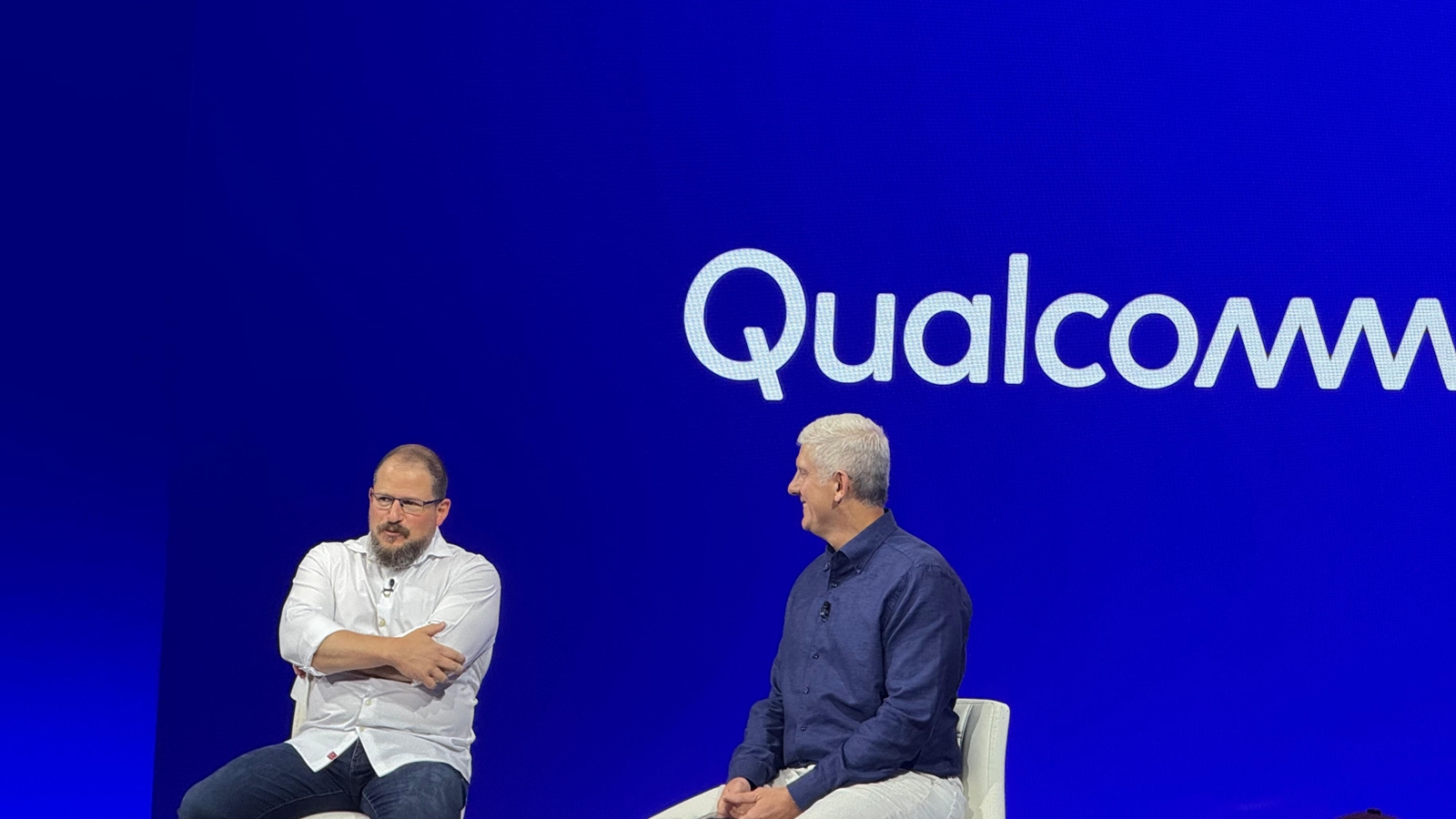
Qualcomm CEO Cristiano Amon has declared that AI agents will replace traditional smartphone apps as the defining computing interface, revealing that the chipmaker is developing over 40 new devices built specifically for an agent-first world. Speaking on CNBC's "The Tech Download" podcast and at the AWE 2026 conference in Long Beach, Amon outlined a vision where hardware is designed around autonomous AI rather than grids of app icons.
/vnd/media/media_files/2025/07/23/qualcomm-introduces-ai-powered-xr-2025-07-23-11-53-02.jpg)
What Qualcomm Is Building
According to Amon, Qualcomm is currently working on more than 40 device designs for an agent-driven future. These span form factors far beyond traditional smartphones and include smart glasses, earbuds with integrated cameras, wearable pins, smart jewellery, and watches. "The principle is something that you wear, something that is with you all the time, something that can see the world around you," Amon explained during the interview. He added that smart glasses could eventually become "as big as the smartphone" in terms of market impact.
Apps Are 'Not Dead' But They Will Change
Amon addressed the inevitable question about the fate of mobile apps directly. "Apps are not dead," he said, "but apps are going to change." He described a future where AI agents serve as the primary interface layer, with traditional apps operating in the background or being completely replaced by conversational, context-aware AI interactions. "Those agents are going to be the new app," he added. This shift mirrors the transition from desktop software to mobile apps that defined the past decade and a half.

The 'Year of Agents' and Edge AI Push
At Computex in Taipei earlier this month, Amon declared that "2026 is the year of agents," describing a world where devices have "two personalities" — one controlled by the user and another operated by AI agents working autonomously in the background. Qualcomm is positioning its Snapdragon chips to handle these AI workloads locally on-device rather than relying on cloud processing, a strategy that reduces latency for agent-driven tasks and addresses privacy concerns about sending personal data to the cloud. "All the devices that we wear become endpoints for agents, and those AI companies understand they have to win those endpoints," Amon said.
What This Means for India
Qualcomm's push into AI agents has significant implications for India's technology ecosystem. India is one of the world's largest markets for affordable smartphones, and Qualcomm-powered devices dominate the mid-range and premium Android segments in the country. If AI agents become the default interface, Indian developers and startups will need to pivot from building app-based experiences to creating agent-driven interactions. For India's burgeoning semiconductor design workforce, Qualcomm's shift also signals growing demand for engineers skilled in edge AI, on-device machine learning, and low-power chip design — areas where Indian talent is increasingly competitive. Indian e-commerce, fintech, and edtech companies would be among the first to adopt agent-based interfaces, given the country's mobile-first user base.
Key Takeaways
- Over 40 devices in development for agent-first computing, from smart glasses to earbuds
- AI agents replace apps as the primary user interface paradigm
- Edge AI focus: Local processing for low latency and privacy
- 2026 declared "the year of agents" at Computex Taipei
- Smart glasses could become as big as the smartphone market, per Amon
For related Voxlogue context, read Google Research's TimesFM 2.5: Open-Source AI Model That Can Forecast Anything from Stock Markets to Weather, and DiffusionGemma: Google Open-Source Model Generates Text 4x Faster Using Image-Style Diffusion.