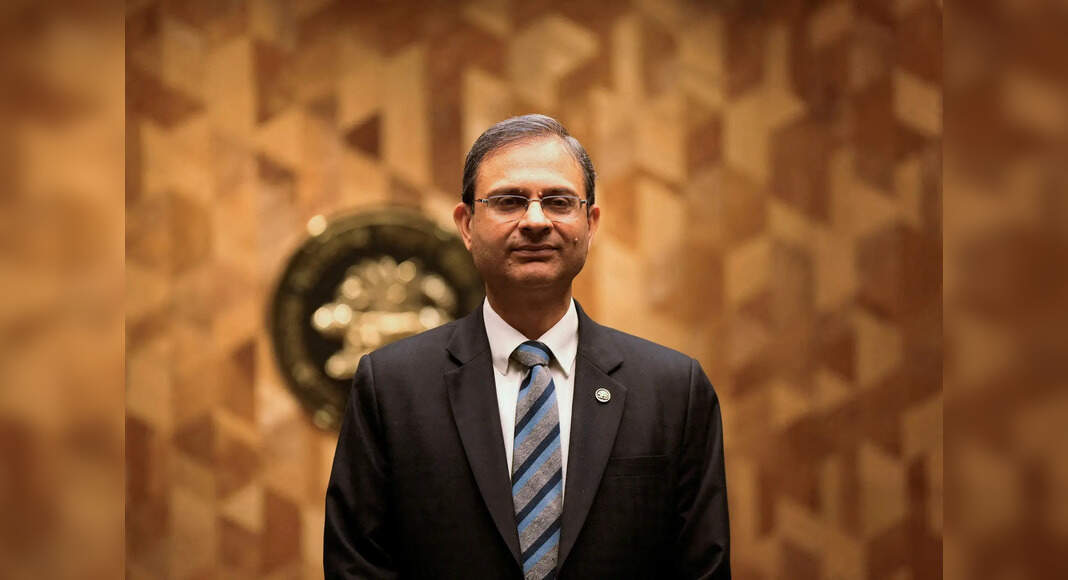
The Reserve Bank of India's Monetary Policy Committee (MPC) unanimously voted on June 5, 2026 to keep the benchmark repo rate unchanged at 5.25 per cent for the third consecutive meeting, maintaining a neutral stance as policymakers grappled with the combined shocks of rising crude oil prices, a weakening rupee, and the escalating West Asia conflict.
The six-member committee led by RBI Governor Sanjay Malhotra also revised down India's GDP growth forecast for FY27 to 6.6 per cent — from 6.9 per cent projected in April — while raising the consumer price index (CPI) inflation forecast to 5.1 per cent from 4.6 per cent, reflecting the deteriorating external environment.
"The adverse implications of the extended disruption in supply chains and elevated energy prices are reflected in the moderation of growth," Governor Malhotra said in his statement, adding that India had entered the current phase of global uncertainty from a position of relative strength, helping the economy absorb spillovers from the West Asia conflict better than in previous episodes of external stress.
Key Policy Decisions and Rate Outlook
The MPC voted 6-0 to maintain the status quo across all key rates. The Standing Deposit Facility (SDF) rate remains at 5.00 per cent, the Marginal Standing Facility (MSF) rate and the Bank Rate stay at 5.50 per cent, and the Cash Reserve Ratio (CRR) is unchanged at 3.00 per cent. The central bank also retained its neutral policy stance, signalling flexibility to respond to incoming data.
The RBI's assumption for crude oil prices was revised sharply upward to $95 per barrel, compared to $85 per barrel in the previous policy. This assumption alone added significant upward pressure to the inflation trajectory. According to the RBI's estimates, India's headline inflation may rise by approximately 36 basis points due to higher petrol and diesel prices alone, before accounting for second-round effects.
The decision to hold rates came despite a vocal minority of economists who had predicted a 25-basis-point hike to pre-empt inflation expectations from becoming unanchored. Governor Malhotra emphasised that the inflation target of 4 per cent "is not in abeyance" and "sacrosanct," but noted that the MPC needed to assess the durability of current price pressures before acting.
GDP Growth and Inflation Trajectory
The RBI's revised growth projection of 6.6 per cent for FY27 reflects the drag from elevated energy prices, weakened external demand, and heightened geopolitical uncertainty. While India remains one of the fastest-growing major economies — Goldman Sachs forecasts 6.9% GDP growth for India in 2026 — — clocking 7.8 per cent GDP growth in Q4 of FY26 — the forward-looking assessment is more cautious.
On inflation, the RBI now expects CPI inflation to average 5.1 per cent in FY27, well above its medium-term target of 4 per cent. Key upside risks include the continued elevation of crude oil prices, a sub-normal monsoon, pass-through of higher input costs to consumer prices, and the weaker rupee making imports more expensive. Wholesale inflation had already accelerated sharply to 8.3 per cent in April, signalling building price pressures in the pipeline.
Rupee Pressure and Measures to Attract Capital
The Indian rupee has touched record lows against the US dollar this year and remains among Asia's weaker-performing currencies, dragged down by foreign portfolio outflows and a higher oil import bill. The RBI announced a series of measures designed to attract foreign capital and stabilise the currency, including expanding the Fully Accessible Route (FAR) to include all new 15-, 30-, and 40-year government securities, entirely removing investment and concentration limits for Foreign Portfolio Investors (FPIs) under the General Route, increasing equity caps for NRIs and OCIs, and introducing tactical liquidity facilities to ease dollar demand.
Governor Malhotra expressed confidence that these measures would generate "healthy dollar inflows," though he declined to provide specific targets. The RBI's forex reserves remain robust at $682.3 billion, providing a significant buffer against currency volatility.
Market Reaction and Expert Views
Indian equity markets ended lower on the day of the policy announcement, with the Sensex and Nifty falling over 2 per cent in a volatile session. The selloff was exacerbated by Trump's remarks on Iran triggering a spike in crude oil prices. The rupee, however, posted its biggest single-day gain in over two months, supported by the RBI's capital- inflow measures.
Deepak Agrawal, CIO-Debt at Kotak Mahindra AMC, said the revised growth and inflation projections "reflect the impact of higher energy prices, geopolitical uncertainty, and potential second-round inflation effects." Standard Chartered, in its July 2026 Weekly Market View, noted that "disinflationary relief" from falling oil prices in some Asian markets was uneven, and that the RBI's room to focus on growth was constrained by external sector risks.
Most economists now expect the RBI to maintain its pause through the next policy meeting, with a potential rate hike of 25-50 basis points possible by October 2026 if crude oil prices remain elevated and inflation pressures persist. HDFC Bank's Principal Economist Sakshi Gupta expects "a cumulative 50 basis points increase in interest rates during FY27."
Key Takeaways
- Repo rate unchanged at 5.25%; all key rates held steady
- FY27 GDP growth forecast cut to 6.6% from 6.9%
- CPI inflation projection raised to 5.1% from 4.6%
- Crude oil price assumption revised to $95/barrel from $85
- Multiple measures announced to attract foreign capital and stabilise rupee
- RBI remains neutral but hawkish; rate hike possible by Q3 FY27
Frequently Asked Questions
What is the current repo rate in India?
The repo rate is 5.25%, unchanged since the December 2025 policy meeting. The RBI has cut rates by 125 basis points since February 2025 but has now paused for three consecutive meetings.
Why did the RBI not hike rates despite rising inflation?
The MPC assessed that inflation pressures are largely supply-driven and transitory, linked to the West Asia conflict and crude oil prices. The committee preferred to wait for more data before acting, while signalling readiness to hike if second-round effects materialise.
Will home loan EMIs increase?
With the repo rate unchanged, banks are unlikely to raise lending rates immediately. However, if the RBI hikes rates in the October policy as some economists expect, home loan EMIs could rise later in the fiscal year.
For related Voxlogue context, read India IT Industry Generates $10-12 Billion in AI Services Revenue, Reveals Nasscom.