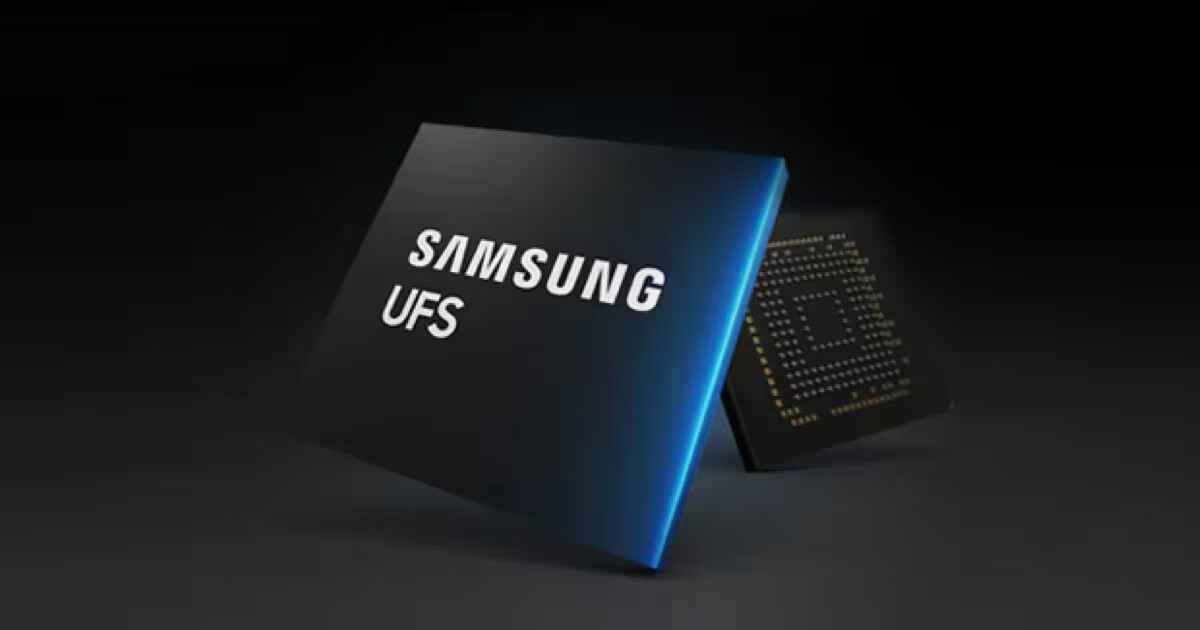
Samsung Electronics announced on Tuesday, June 23, 2026, that it has developed the industry's fastest Universal Flash Storage (UFS) 5.0 solution, setting a new benchmark for mobile memory performance. The new storage standard achieves unprecedented data transfer speeds of up to 10.8 GB per second, specifically designed to accelerate on-device artificial intelligence applications.
Breakthrough performance numbers
Samsung's UFS 5.0 delivers sequential read speeds of up to 10.8 GB/s and sequential write speeds of up to 9.5 GB/s — more than double the performance of the previous UFS 4.1 standard. This is achieved through integration with the latest JEDEC embedded memory interface standard, which enables the highest bandwidth ever seen in mobile storage. The performance leap means large language models and AI workloads running locally on smartphones will experience dramatically reduced latency and faster response times.
Why this matters for on-device AI
Generative AI is rapidly shifting from cloud-based processing to on-device computation, driving a surge in the volume of data that must be processed locally. Storage is evolving from a medium primarily used to store photos and apps into core infrastructure that supports AI computation. "In the era of on-device AI, storage devices are evolving into a key driver defining AI experiences," said Jangseok Choi, head of Memory Product Planning at Samsung Electronics. The new UFS 5.0 is purpose-built to handle the massive data throughput requirements of on-device LLMs.
Power efficiency gains
Beyond raw speed, Samsung's UFS 5.0 delivers more than 40% improvement in power efficiency compared to UFS 4.1. This is achieved through technologies such as clock gating and multi-voltage support, which reduce unnecessary power consumption during storage operations. For smartphone users, this translates to longer battery life even as devices run increasingly complex AI features. The efficiency gains are particularly significant for always-on AI assistants, real-time translation, and on-device image generation.
Impact on Indian smartphone market
The announcement has significant implications for India's smartphone ecosystem, one of the largest and fastest-growing markets globally. With Samsung being a dominant player in the Indian smartphone segment, UFS 5.0 is expected to first appear in premium Galaxy devices. Indian consumers can expect flagship smartphones with faster app loading, smoother multitasking, and enhanced AI camera capabilities. The technology is also expected to benefit India's thriving app development ecosystem by enabling more sophisticated on-device AI applications.
Production timeline and availability
Samsung plans to begin mass production of UFS 5.0 storage chips in the fourth quarter of 2026. The new storage is expected to debut in next-generation flagship smartphones, possibly including the Galaxy S27 series, which is rumored to feature Samsung's Exynos 2700 processor. Beyond smartphones, UFS 5.0 is designed for XR headsets, AI wearables, and other devices that increasingly rely on local AI processing rather than cloud-based services.
Sources: Samsung Global Newsroom, Korea Bizwire, Digital Trends, Windows Report, Business Wire