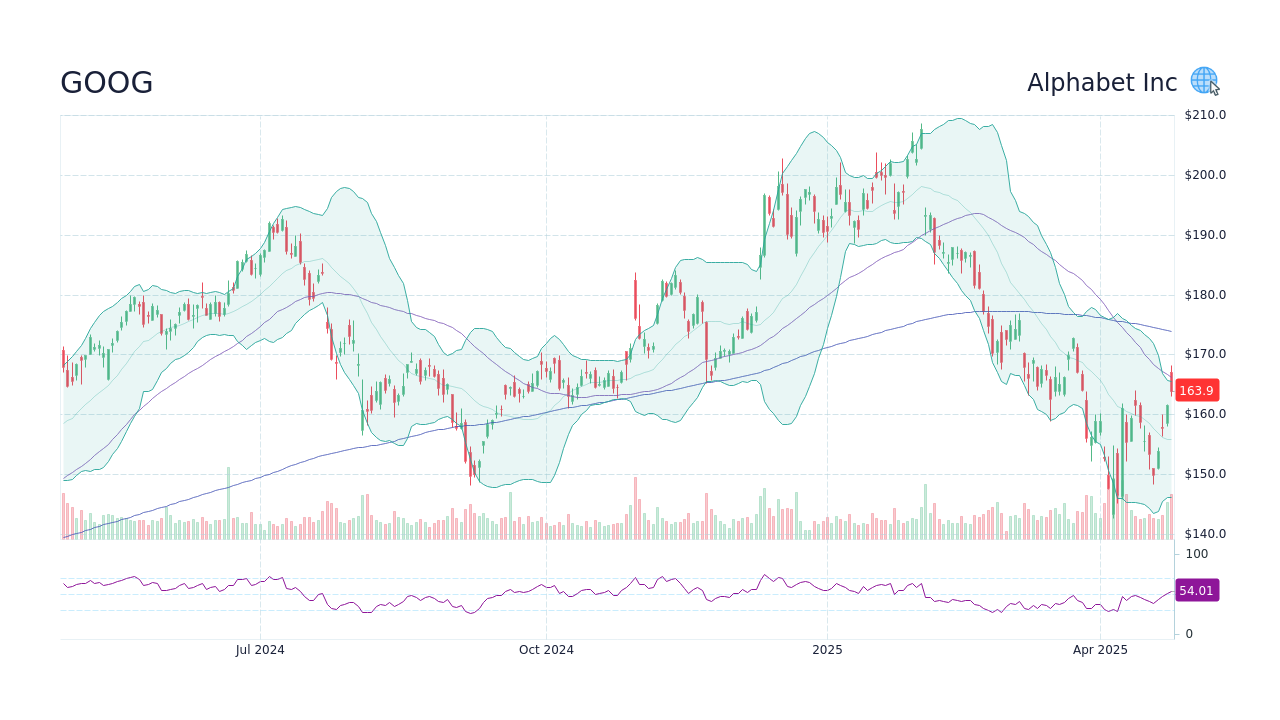
Alphabet Inc. shares tumbled 5% in after-hours trading on Monday, June 22, 2026, as mounting investor concern over hyperscaler AI infrastructure spending triggered a broad sell-off in technology stocks that cascaded across global markets on Tuesday. The decline in Google's parent company was a key catalyst for a rout that erased over $1 trillion in market value worldwide.
The AI spending question
The core concern driving the sell-off is simple: can hyperscale technology companies justify the hundreds of billions of dollars they are pouring into AI data centers and infrastructure? Big Tech companies collectively plan to spend approximately $630-650 billion on AI infrastructure in 2026, but investors are increasingly questioning whether those investments will generate adequate returns in a reasonable timeframe. Alphabet alone committed tens of billions to AI compute infrastructure, and its 5% stock decline signaled that the market is losing patience with the spend-first, monetize-later approach.
Market reaction in numbers
The sell-off was severe and broad. Alphabet's 5% decline was matched by weakness across the tech sector. Amazon shares fell on AI spending concerns ahead of Prime Day. Microsoft and Meta Platforms also declined. The broader market impact was dramatic — Nasdaq 100 futures tumbled 2.4%, S&P 500 futures slid 1.4%, and Asian markets opened sharply lower. South Korea's KOSPI crashed 10%, while Japan's Nikkei fell 3.55%. The magnitude of the sell-off suggests deep-seated investor anxiety about tech valuations.
The profit vs investment dilemma
Technology companies face a difficult strategic dilemma. On one hand, failing to invest in AI infrastructure risks falling behind competitors in what is widely seen as the most significant technology shift since the internet. On the other hand, the massive capital expenditure is squeezing profit margins and free cash flow, and the timeline for monetization remains uncertain. Alphabet, for instance, is integrating AI across its products from Search to Cloud to YouTube, but translating AI capabilities into measurable revenue growth has been slower than investors hoped.
Impact on Indian markets and tech sector
The sell-off had immediate repercussions for Indian markets. The Nifty IT index fell sharply as investors reassessed the outlook for Indian IT services companies that derive significant revenue from US tech giants. Infosys, TCS, HCL Tech, and Wipro all saw their shares decline. The broader Sensex and Nifty indices also came under pressure, though losses were partially cushioned by gains in domestic-facing sectors. The sell-off also raises questions about the sustainability of Indian IT companies' AI-related revenue growth, which has been a key driver of their recent performance.
What analysts are saying
Wall Street analysts are divided on whether the sell-off represents a healthy correction or the beginning of a deeper downturn. Some argue that AI investment will eventually generate massive returns, drawing parallels to early internet infrastructure spending that seemed excessive at the time but ultimately proved transformative. Others warn that the current spending cycle is unprecedented in scale and that many AI applications have yet to demonstrate clear business value. The uncertainty has led to heightened volatility, with the CBOE Volatility Index (VIX) rising sharply.
Broader implications for investors
The sell-off serves as a reminder of the risks of concentrated portfolio exposure to AI and technology stocks. The narrow market leadership that powered the 2025 rally — with a handful of mega-cap tech stocks driving most of the gains — has become a source of vulnerability. Financial advisors recommend diversification across sectors and geographies, and caution against making portfolio decisions based on short-term market movements. The underlying long-term thesis for AI remains intact, but the path to profitability may be more volatile than many investors anticipated.
Sources: Bloomberg, CNBC, Morningstar, Reuters, NYT, Financial Express