International Team Finds Evidence That Sagittarius A* Is Blowing a Gentle Cosmic Wind, Carving a Giant Cavity Near the Galaxy's Heart
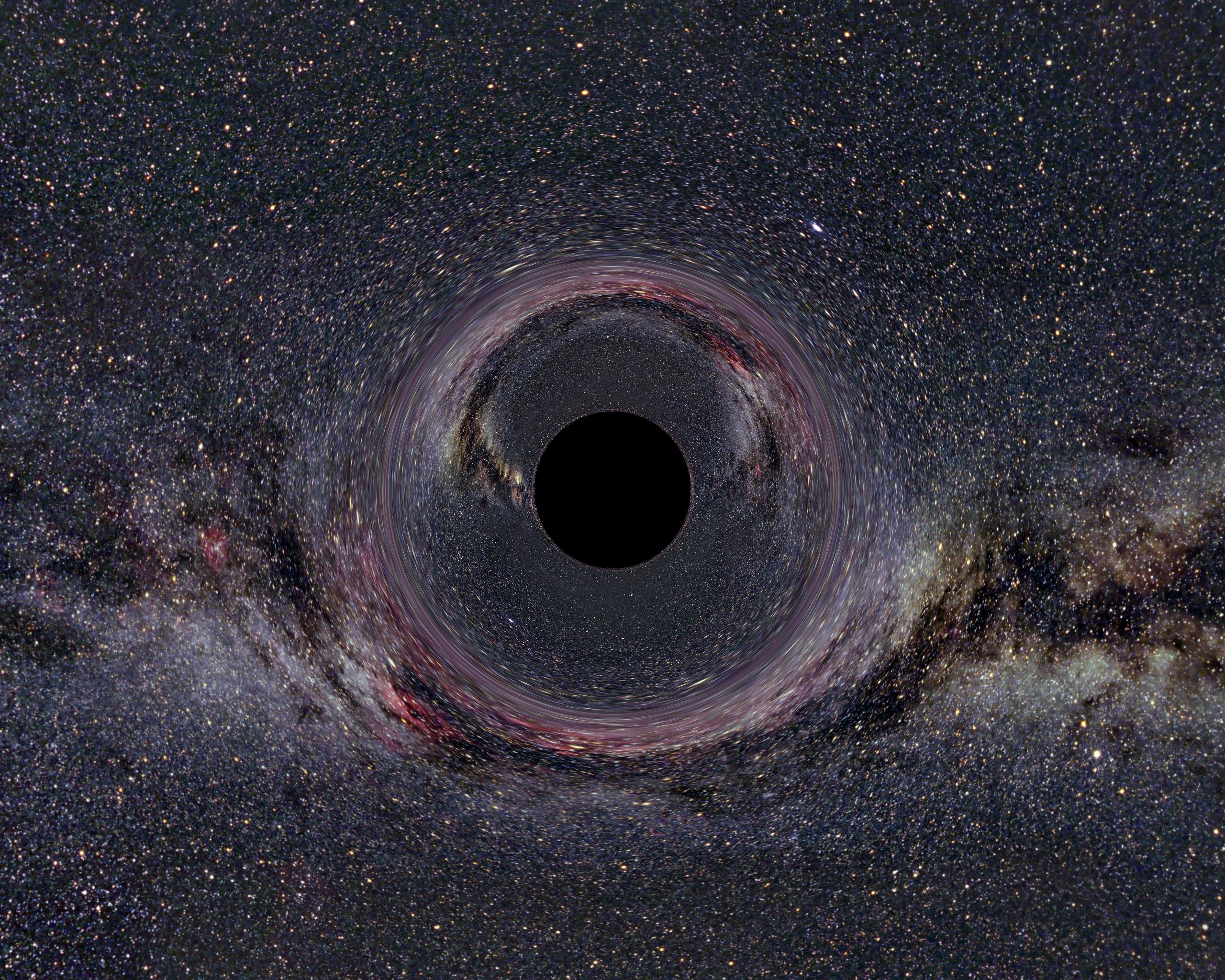
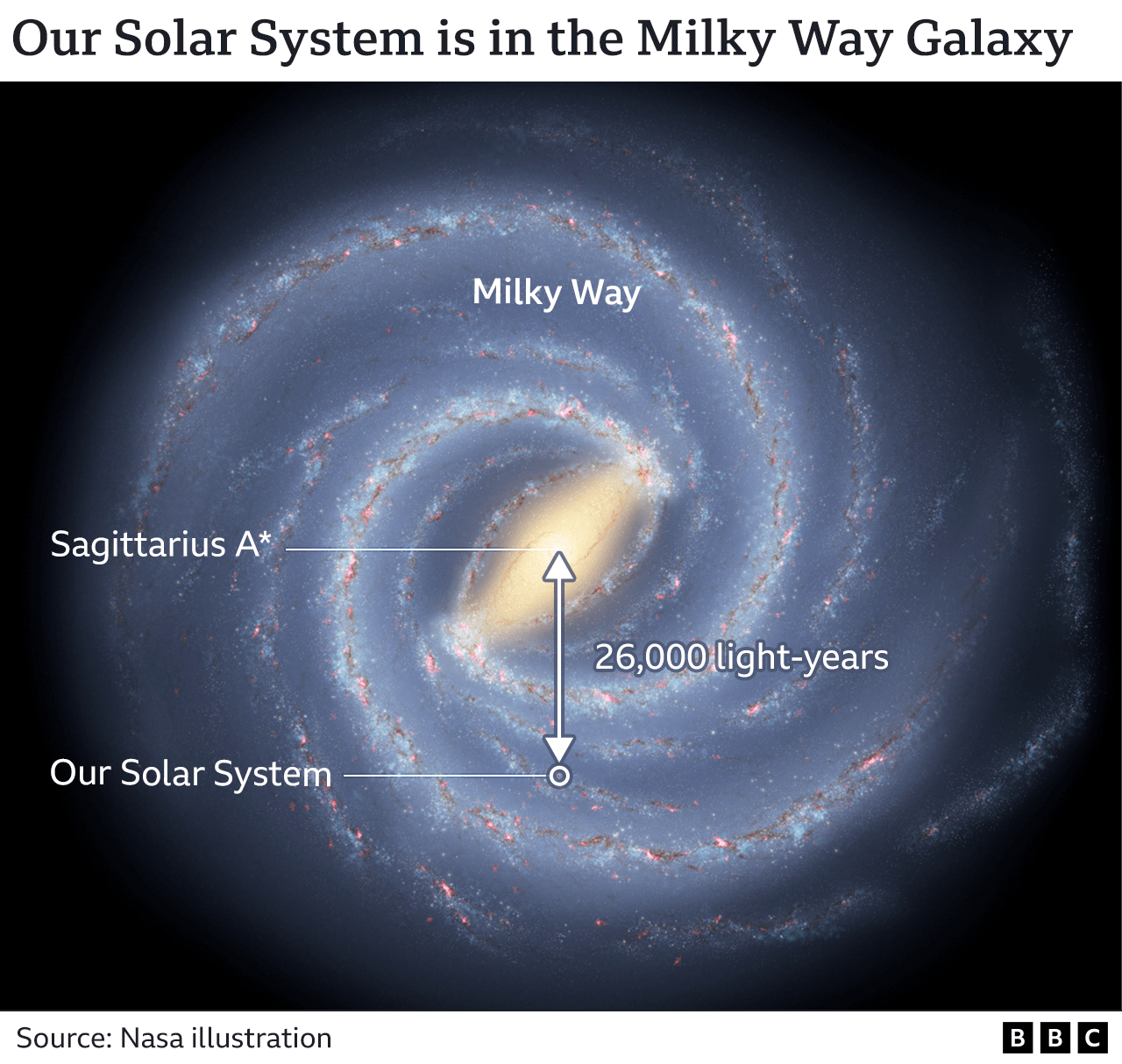
After five decades of searching, astronomers have finally discovered evidence that Sagittarius A* ' the 4.3-million-solar-mass supermassive black hole at the centre of the Milky Way ' is producing a hot cosmic wind that blows into its surroundings, carving out a massive conical cavity near the galaxy's heart. The discovery, published in The Astrophysical Journal Letters on June 4, 2026, fills a major gap in our understanding of how even 'quiet' black holes interact with and shape their host galaxies.
The research team, led by Mark Gorski of Northwestern University and Lena Murchikova, used combined data from the Atacama Large Millimeter/submillimeter Array (ALMA) in Chile and NASA's Chandra X-ray Observatory to identify a cone-shaped void in the cold gas surrounding the galactic centre. This cavity, they calculated, could only have been created by an energetic outflow from Sagittarius A* ' the long-theorised but never-observed black hole wind.
"It is very attractive to study black holes when they are in the fireworks stage, but that's not actually their dominant state," Gorski said. "Sagittarius A* finally gives us a window into the life of a black hole in this quiet state."
A Gentle Breeze, Not a Hurricane
Unlike the powerful relativistic jets and intense radiation-driven winds observed from active galactic nuclei ' supermassive black holes in distant galaxies that are actively consuming large amounts of matter ' the wind from Sagittarius A* is more like a gentle breeze. The Milky Way's central black hole is in a relatively quiescent state, consuming very little material compared to its more voracious counterparts in other galaxies.
Yet even this gentle wind has sculpted its environment in measurable ways. The cone-shaped cavity visible in the ALMA data represents a region where cold gas has been displaced or heated by the outflow. The energy required to create this structure exceeds what could be accounted for by stars in the region, leaving the supermassive black hole as the only viable energy source.
"If you blow hot material from the black hole, it's not going to want to exit with the cold material," Gorski explained. "It's either going to push the cold material out or heat it up. And, if it's too hot, you will no longer see the cold gas. It's a huge absence of material."
Why This Discovery Matters
The finding has implications that extend well beyond our galaxy. Most supermassive black holes in the universe spend the vast majority of their existence in a quiet state similar to Sagittarius A*. Understanding how these quiescent black holes interact with their environments ' through winds, outflows, and feedback mechanisms ' is essential to understanding galaxy evolution.
"Supermassive black holes throughout the universe live most of their time in a quiet state," Gorski noted. "So these findings tell us that even though most black holes are pretty quiet, they're still having an impact."
Winds from black holes can either suppress or trigger star formation ' they can heat surrounding gas and prevent it from collapsing into new stars, or they can compress gas clouds and catalyse star birth. The discovery of a wind from Sagittarius A* provides a local laboratory for studying these processes, complementing observations of distant active galaxies.
Rebecca Diesing, an astrophysicist at Columbia University not involved in the research, called the finding "a big deal." She added: "It would demonstrate that our supermassive black hole is not unique, that it produces a wind just like those in other galaxies."
This discovery comes as other astronomical instruments continue to transform our understanding of black holes. The James Webb Space Telescope recently identified what may be 'black hole stars' in the early universe, while the JUNO neutrino observatory has provided new insights into particle physics. The Sagittarius A* wind discovery adds another critical piece to the puzzle of how black holes ' even the quiet ones ' shape the cosmos.
Sources
- Sci.News ' Astronomers Finally Find Milky Way's Missing Black Hole Wind (sci.news, June 8, 2026)
- Reuters ' Wind from Milky Way's supermassive black hole is finally discovered (reuters.com, June 5, 2026)
- Science News ' Even quiet black holes create winds, new Milky Way observations reveal (sciencenews.org, June 4, 2026)
- The Astrophysical Journal Letters ' Gorski & Murchikova (2026), doi:10.3847/2041-8213/ae63cf