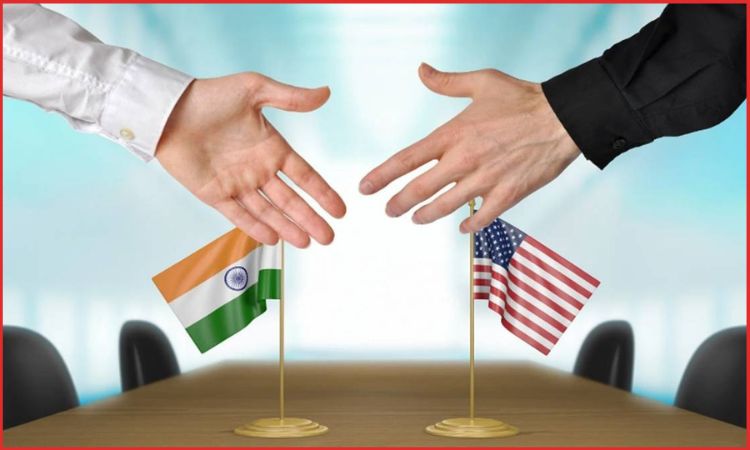
India and the United States have undertaken a comprehensive review of their bilateral trade relationship, focusing on core elements including market access, non-tariff barriers, and tariff rationalisation, as both sides seek to recalibrate their economic partnership amidst shifting global trade dynamics. The review follows the landmark India-US Trade Accord signed earlier this year, which aims to double bilateral trade to $500 billion by 2030.
Key Areas of Discussion
According to officials familiar with the proceedings, the review covered several critical sectors including agricultural tariffs, digital trade rules, pharmaceutical patent protections, and services sector access. India has long raised concerns about US visa restrictions affecting its IT professionals, while the US has pressed for greater market opening in India's agricultural and dairy sectors. Both sides also discussed aligning standards on data localisation requirements, e-commerce regulations, and the treatment of digital services taxes — issues that have been a source of friction in the past but are now being addressed under the new bilateral framework.
India's Stand on Non-Tariff Barriers
New Delhi emphasised the need for the US to address non-tariff barriers that Indian exporters face, particularly in the steel, aluminium, and textile sectors. Indian officials pointed to US regulatory certification requirements, labelling standards, and sanitary and phytosanitary measures that often delay or block Indian shipments at American ports. The Indian side also requested easier access for Indian generic pharmaceuticals under the US healthcare system, proposing a fast-track approval pathway for drugs that have already received regulatory clearance from Indian authorities. The US indicated willingness to explore mutual recognition agreements in certain sectors, though agriculture remains a sensitive area where progress is expected to be gradual.
Technology and Digital Trade Agreements
A significant portion of the talks centred on digital trade and technology cooperation. Both nations agreed to deepen collaboration on artificial intelligence governance, semiconductor supply chains, and 5G/6G telecommunications standards. The US proposed a bilateral AI safety framework that would align testing standards and red-teaming requirements, building on commitments made at the G7 summit. India, for its part, pushed for greater technology transfer commitments from American firms investing in India's electronics and defence manufacturing sectors under the Production Linked Incentive (PLI) scheme. The review also touched on potential cooperation in critical minerals processing, where India seeks US investment in lithium refining and rare earth processing capacity.
Implications for Indian Exporters and Businesses
For Indian exporters, the review signals a more predictable and structured trade environment. The resolution of outstanding WTO disputes — including the long-running poultry and solar panel cases — has cleared the path for more constructive engagement. Indian IT services companies, which generate approximately $60 billion annually from the US market, are watching closely for any changes to H-1B visa policies that could affect their ability to deploy engineers on-site. The services sector review included discussions on mutual recognition of professional qualifications, which could allow Indian architects, accountants, and engineers to practice more freely in the United States.
Timeline and Next Steps
Both sides have committed to a 90-day action plan following the review, with specific milestones for tariff reductions in sectors where agreement has already been reached. The next formal round of trade talks is expected in September 2026 in New Delhi. The review also established a joint monitoring mechanism to track implementation of commitments and resolve emerging disputes before they escalate. Additionally, a business facilitation forum with representatives from both Indian and American industry bodies will be created to provide ongoing input to negotiators on ground-level trade barriers that may not surface in government-to-government discussions.
For related Voxlogue context, read China-Taiwan Coast Guard Standoff at Pratas Islands Marks Second Clash in a Fortnight — What’s Escalating, and India and Iran Revive Energy Trade Talks at BRICS After 7-Year Oil Import Halt.