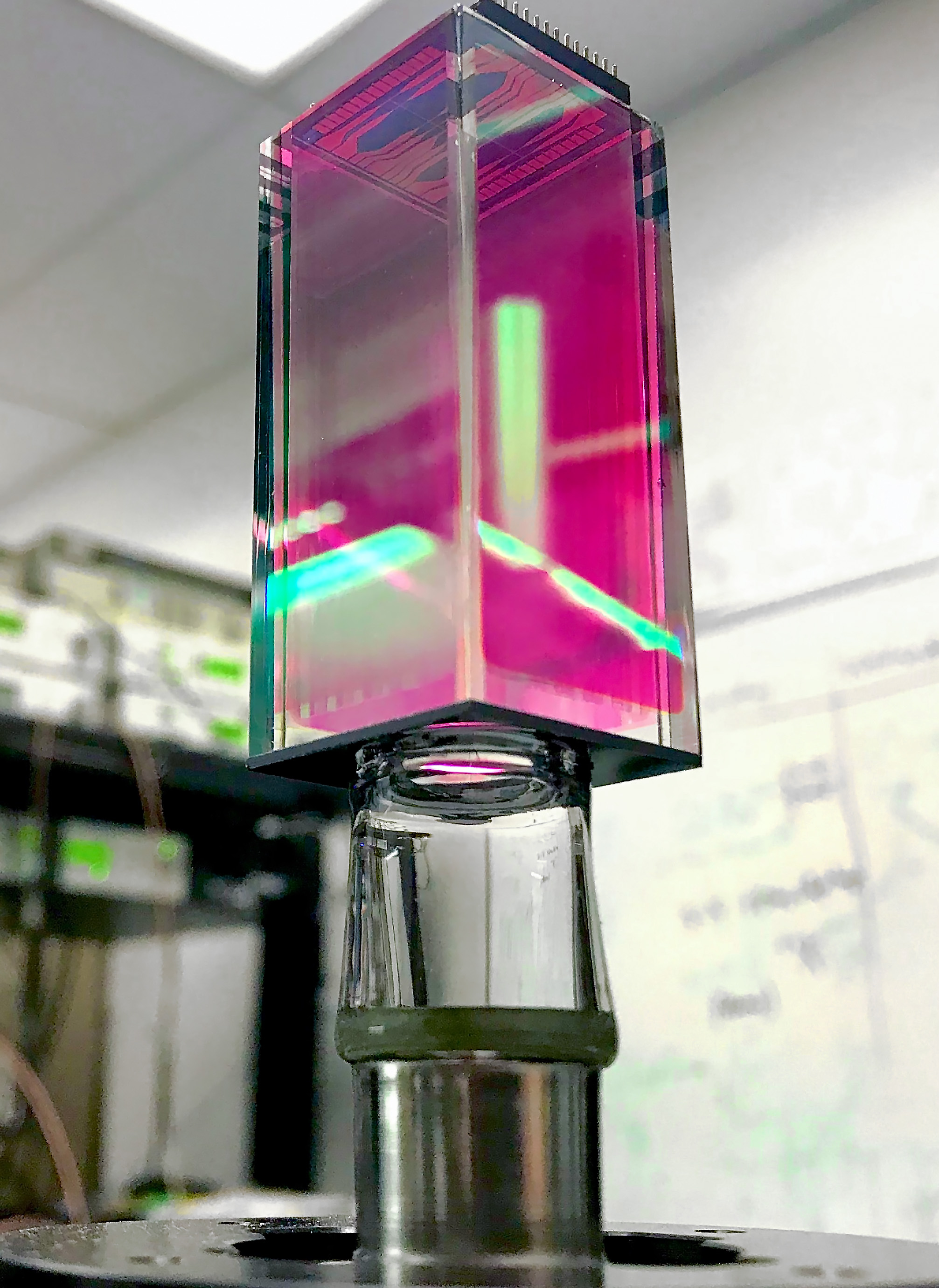
The Coldest Spot in the Universe
NASA's Cold Atom Laboratory aboard the International Space Station has achieved a remarkable milestone by creating Bose-Einstein condensates — an exotic fifth state of matter — in orbit. The instrument, which is about the size of a mini refrigerator and is controlled remotely from Earth, cools atoms to temperatures just above absolute zero, creating conditions that are impossible to achieve on Earth.
Since its installation on the ISS in 2018, the Cold Atom Lab has undergone four major upgrades. The latest enhancement has expanded its quantum research capabilities, allowing scientists to create even larger and longer-lasting Bose-Einstein condensates in the microgravity environment of low Earth orbit.
What Are Bose-Einstein Condensates?
A Bose-Einstein condensate occurs when a cloud of atoms is cooled to such extremely low temperatures that they lose their individual identities and begin to behave as a single quantum object. Essentially, the microscopic becomes macroscopic — a visible collection of atoms that still obeys quantum mechanical laws.
This state of matter, first predicted by Albert Einstein and Satyendra Nath Bose in the 1920s, was only created in a laboratory for the first time in 1995. The Nobel Prize in Physics was awarded for this achievement in 2001. Creating BECs in space allows scientists to observe quantum phenomena for several seconds at a time rather than the milliseconds possible on Earth.
Why Microgravity Matters
On Earth, gravity pulls atoms downward as soon as magnetic or laser traps are turned off, limiting observation time to milliseconds. In the microgravity environment of the ISS, atoms simply float, allowing scientists to observe quantum behaviour for seconds at a time.
This extended observation window is the key to unlocking practical quantum technologies. "As the first project to create Bose-Einstein condensates in orbit, we're demonstrating that we can make quantum technology work reliably in space," said Ethan Elliott, deputy project scientist for the Cold Atom Lab at NASA's Jet Propulsion Laboratory.
India's Quantum Connections
The Indian connection to Bose-Einstein condensates runs deep — Satyendra Nath Bose, after whom the boson and Bose-Einstein statistics are named, was an Indian physicist. India's own quantum mission, the National Quantum Mission with a ₹6,003 crore budget, aims to develop quantum computers, communication systems, and sensors.
Indian institutions like the Raman Research Institute, the Tata Institute of Fundamental Research, and the Indian Institute of Science are actively researching ultra-cold atoms and quantum optics. NASA's Cold Atom Lab findings directly inform the work of Indian quantum physicists exploring fundamental physics in microgravity.
For more on science news, see our coverage: Glyphosate Weedkiller May Be Fueling Drug-Resistan. For related updates, also read this:
For more on science news, see our coverage: Astronomers Discover Sleeping Giant Black Hole 6 B. For related updates, also read this:
Sources: ScienceDaily — NASA Cold Atom Lab, NASA Jet Propulsion Laboratory, Nature research publications on BECCAL.