Solving the H5N1 Cow Mystery
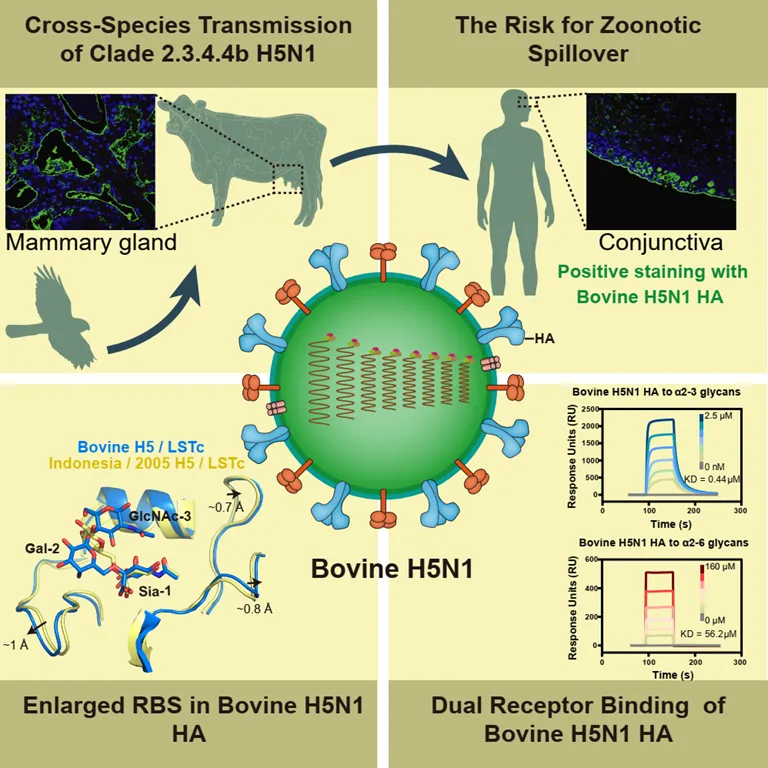
Scientists have finally solved one of the most perplexing questions about the H5N1 bird flu outbreak in dairy cattle: why the virus attacks cows' udders instead of their lungs. The breakthrough, published by a team of virologists from the US Department of Agriculture and several academic institutions, could help predict and prevent future animal-to-human virus jumps.
The H5N1 avian influenza virus has been circulating in dairy cattle across multiple US states since early 2024, causing significant economic losses and raising public health concerns. Unlike typical influenza viruses that target respiratory tissue, H5N1 in cows concentrates almost exclusively in mammary tissue, leading to reduced milk production and abnormal milk consistency.
The Receptor Mechanism
The research team discovered that H5N1's preferred receptors — the molecular doorways the virus uses to enter cells — are concentrated in bovine mammary tissue rather than in the respiratory tract. The virus has a surface protein, hemagglutinin, that binds strongly to sialic acid receptors abundant in udder cells.
This tissue-specific tropism explains why infected cows show few respiratory symptoms. Instead, the virus replicates to high levels in milk, potentially creating a transmission route to other animals and humans who consume unpasteurised dairy products or come into contact with contaminated milking equipment.
Implications for Pandemic Preparedness
The discovery has major implications for pandemic preparedness. Understanding the molecular basis of H5N1's tissue preference helps scientists predict which other mammals might be susceptible. The receptor profile in cows' udders is similar to that found in some other livestock species, suggesting the virus could potentially adapt to other domesticated animals.
"This breakthrough could help scientists predict future bird flu jumps and spot unusual infection patterns earlier," the researchers noted. The finding also underscores the importance of pasteurisation — the FDA has confirmed that standard pasteurisation effectively inactivates H5N1 in milk.
India's Livestock Vulnerability
India has the world's largest livestock population, with over 300 million cattle and buffalo. The country's dairy sector is the largest globally, producing over 220 million tonnes of milk annually. An H5N1 outbreak in Indian cattle would have catastrophic economic consequences.
The Indian Council of Agricultural Research and the National Institute of High Security Animal Diseases are closely monitoring the situation. India has strengthened its avian influenza surveillance programme, particularly along migratory bird flyways that overlap with major cattle-rearing regions in Gujarat, Rajasthan, Uttar Pradesh, and Punjab.
For more on science news, see our coverage: Glyphosate Weedkiller May Be Fueling Drug-Resistan. For related updates, also read this:
For more on science news, see our coverage: Astronomers Discover Sleeping Giant Black Hole 6 B. For related updates, also read this:
Sources: ScienceDaily — H5N1 cow mystery solved, USDA Agricultural Research Service, National Institutes of Health, FAO animal health reports.