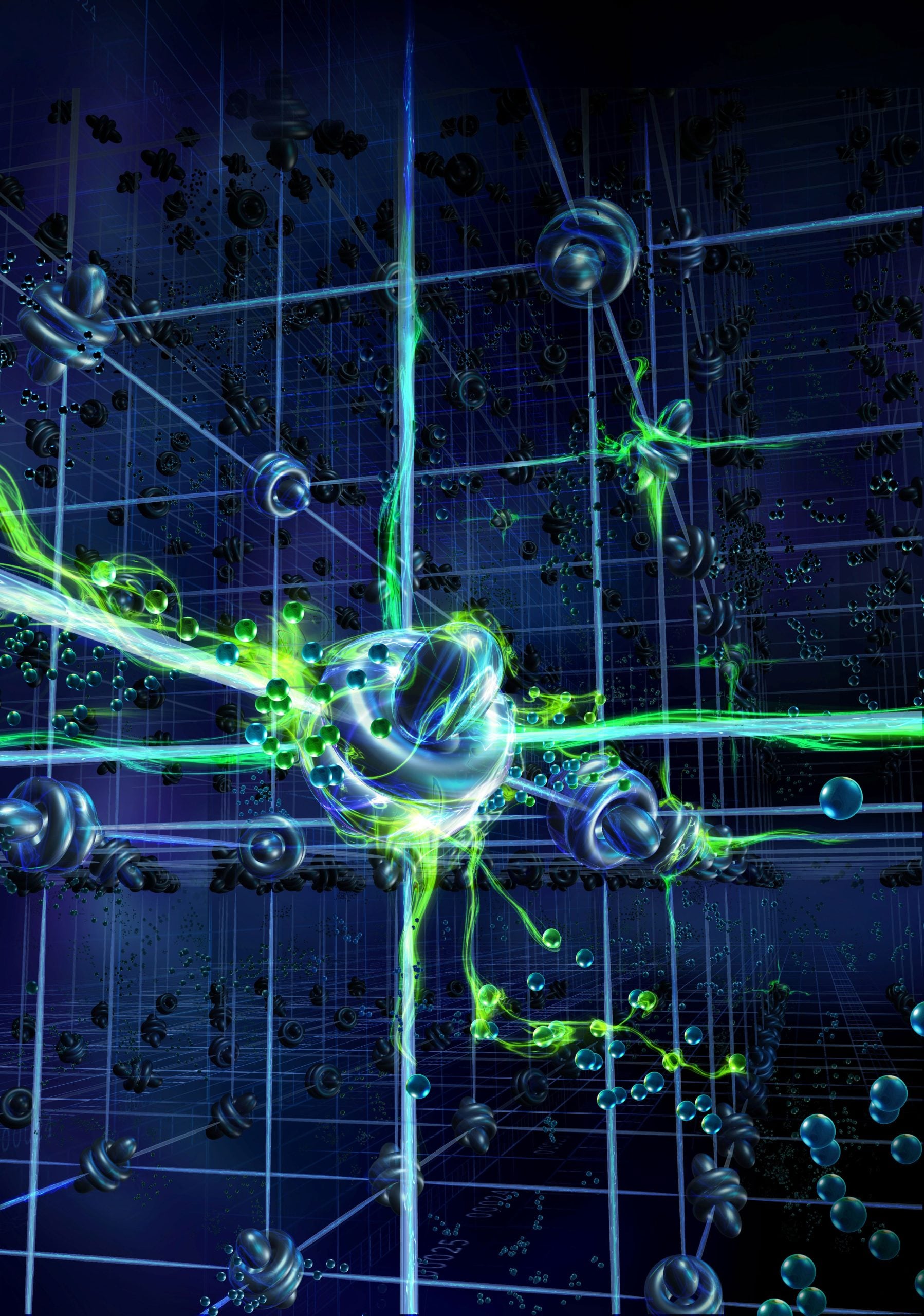
A Dormant Cosmic Giant from the Dawn of Time
An international team of astronomers has discovered the most distant dormant supermassive black hole ever detected, a sleeping giant weighing approximately 6 billion solar masses in the galaxy MRG-M0138, located over 10 billion light-years from Earth. The discovery, published in the journal Science, shatters the previous record for the most distant inactive black hole by a factor of 15.

The black hole is dormant, meaning no gas is currently accreting onto it, rendering it completely invisible through traditional observation methods. Astronomers detected it purely through its gravitational pull on surrounding stars, using a groundbreaking combination of gravitational lensing and the James Webb Space Telescope's infrared capabilities.
How Astronomers Found the Invisible
Detecting an inactive black hole is extraordinarily difficult because black holes themselves emit no light. The research team, led by Dr. Andrew Newman of Carnegie Science and Professor Richard Ellis of University College London, used two techniques in tandem. First, a foreground galaxy cluster magnified the light from MRG-M0138 by a factor of 30 through gravitational lensing, allowing the team to resolve its internal structure. Second, they used the James Webb Space Telescope to measure the velocities of stars orbiting the galaxy's center. The speed difference between inner stars — affected by the black hole's gravity — and outer stars allowed them to calculate the black hole's mass.
As Professor Ellis explained, determining how stars collectively move within the core of this distant galaxy has allowed us to measure the mass of its otherwise undetectable supermassive black hole. This is the first time the stellar dynamics technique has been successfully applied at such a vast cosmological distance. Previously, the farthest galaxy studied using this technique was about 700 million light-years away.
What the Discovery Means for Galaxy Evolution
The discovery provides crucial evidence for the feedback mechanism that connects black hole growth to galaxy evolution. MRG-M0138 is fully dormant — both the black hole and its host galaxy have stopped growing. Researchers believe this galaxy once hosted a bright quasar, a period when the black hole was actively consuming gas and emitting enormous energy. That energy likely heated or expelled the gas needed for star formation, effectively shutting both the black hole and the galaxy down. This demonstrates that the relationship between galaxy mass and central black hole mass existed very early in the universe's history, just 3 billion years after the Big Bang.
| Property | Value |
|---|---|
| Black Hole Mass | ~6 billion solar masses |
| Host Galaxy | MRG-M0138 |
| Distance | 10+ billion light-years |
| Redshift | z ~ 2 |
| Universe Age at Observation | ~3 billion years |
| Previous Record Distance | 700 million light-years (15x closer) |
| Discovery Method | Stellar dynamics + gravitational lensing + JWST |
India Angle: Indian Astronomy's Growing Role
India's contributions to astronomy and astrophysics are growing rapidly, with institutions like the Indian Institute of Astrophysics, the Inter-University Centre for Astronomy and Astrophysics, and the Tata Institute of Fundamental Research making significant discoveries. India's AstroSat mission continues to provide valuable data on black holes and X-ray sources, while Indian researchers are actively involved in the Thirty Meter Telescope project and the Square Kilometre Array. The discovery of dormant black holes at extreme distances opens new avenues for Indian astronomers to study galaxy evolution using the upcoming NASA-ISRO NISAR satellite and India's proposed X-ray Polarimeter Satellite.
Limitations and Future Research
While this discovery is a major breakthrough, it represents a single data point. Scientists expect JWST to uncover many more dormant black holes, allowing a statistical census of how black holes suppress star formation in the early universe and how they can wake up again when fresh gas becomes available. The discovery also validates the stellar dynamics technique for distant galaxies, opening a new window into the co-evolution of galaxies and their central black holes.
For related Voxlogue context, read Einstein Probe May Have Caught a Black Hole Tearing Apart a White Dwarf for the First Time, and Astronomers Finally Discover Milky Way's Missing Black Hole Wind After 50-Year Search.