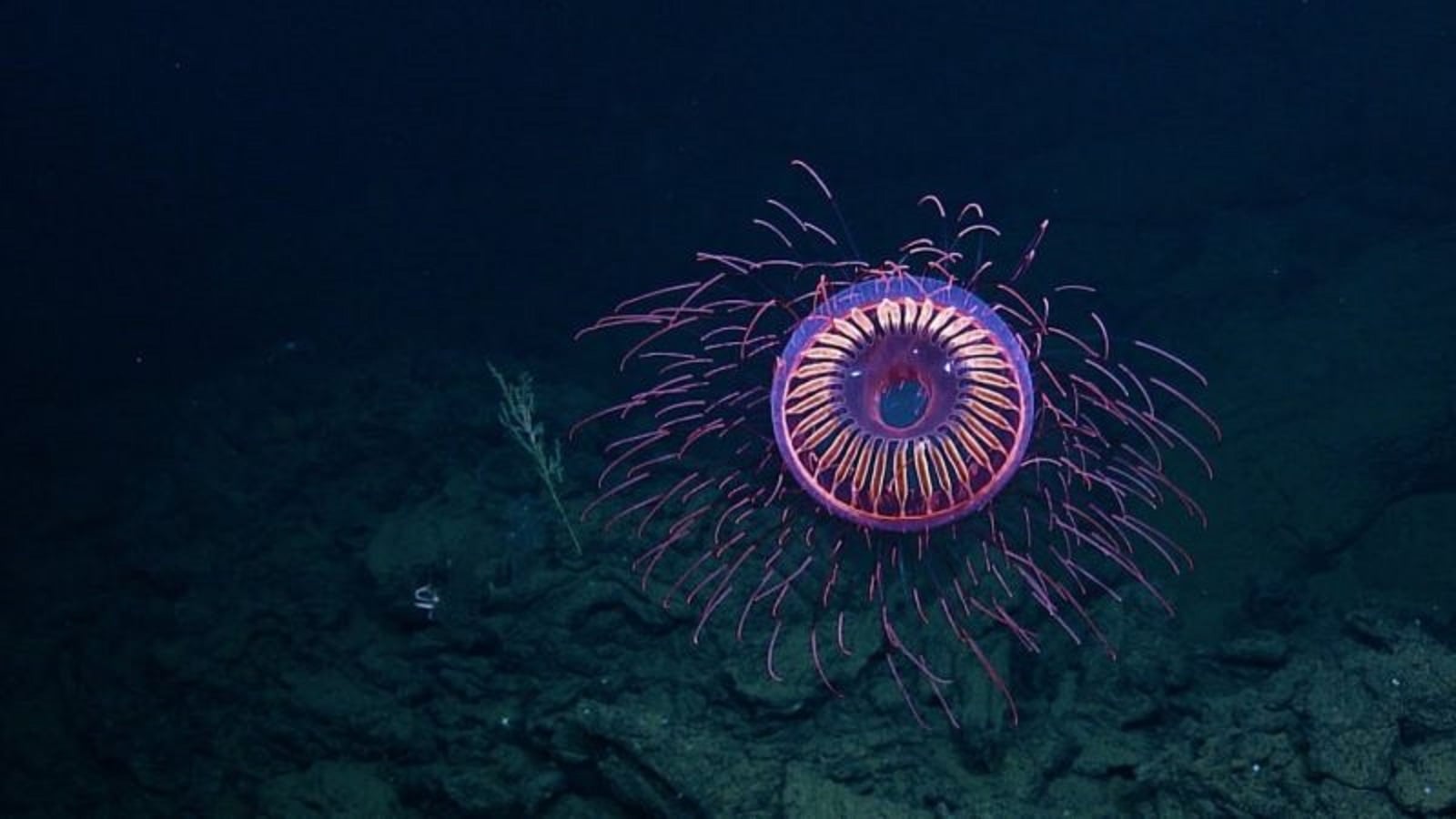
Scientists have discovered 1,121 marine species in a single year, marking the most significant advance in ocean biodiversity documentation in decades. The discoveries, announced by the Ocean Census programme on May 19, 2026, span from the sunlit surface waters to the deepest ocean trenches, revealing that life in the world's oceans is far richer and more diverse than previously documented.
The Nippon Foundation-Nekton Ocean Census, the largest global initiative to accelerate the discovery of marine life, deployed scientists across the Atlantic, Pacific, and Indian Oceans using advanced technologies including DNA sequencing, high-resolution imaging, and remotely operated vehicles capable of reaching depths beyond 8,000 metres.

What was discovered
The 1,121 new species include previously unknown fish, corals, sponges, crustaceans, molluscs, and microbial life forms. Among the most striking finds are species from the hadal zone — the deepest parts of the ocean, below 6,000 metres — where scientists previously believed only a handful of specialised organisms could survive. The discoveries suggest entire ecosystems exist in these trenches beyond previously known biological limits.
The Ocean Census used environmental DNA (eDNA) sampling, a technique that analyses genetic material floating in seawater, to detect species without physically capturing them. This approach revealed a hidden world of microbial and small-organism diversity that traditional net-based sampling would have missed entirely.
"This is not just about counting species — it is about understanding the fundamental architecture of life in the ocean," said a lead researcher from the programme. "Every new species we document is a piece of a puzzle that helps us understand how marine ecosystems function, how they are changing, and what we stand to lose if we do not protect them."

The technology making it possible
The acceleration in species discovery is driven by a convergence of technologies that did not exist at this scale a decade ago. Environmental DNA sequencing allows scientists to identify species from traces of genetic material in water samples — no physical specimen required. Autonomous underwater vehicles and remotely operated vehicles can now spend days at depth, capturing high-resolution imagery and collecting samples from locations that were previously inaccessible.
Machine learning algorithms are then used to analyse the vast datasets generated, flagging genetic sequences or images that do not match any known species. What once required years of painstaking taxonomic work by human experts can now be accelerated dramatically, with AI serving as a first-pass filter that directs human researchers to the most promising candidates for formal description.
Despite this acceleration, scientists estimate that over 90 percent of ocean species remain undiscovered. The current rate of discovery, while impressive, still represents only a fraction of what exists in the deep ocean — a realm that covers more than 60 percent of the Earth's surface but remains less mapped than the surface of Mars.
| Metric | Figure |
|---|---|
| New species discovered (2025-2026) | 1,121 |
| Estimated undiscovered ocean species | ~90% |
| Deepest exploration depth reached | 8,000+ metres |
| Oceans surveyed | Atlantic, Pacific, Indian |
| Key technologies used | eDNA, ROVs, AI-assisted analysis |
What this means for India
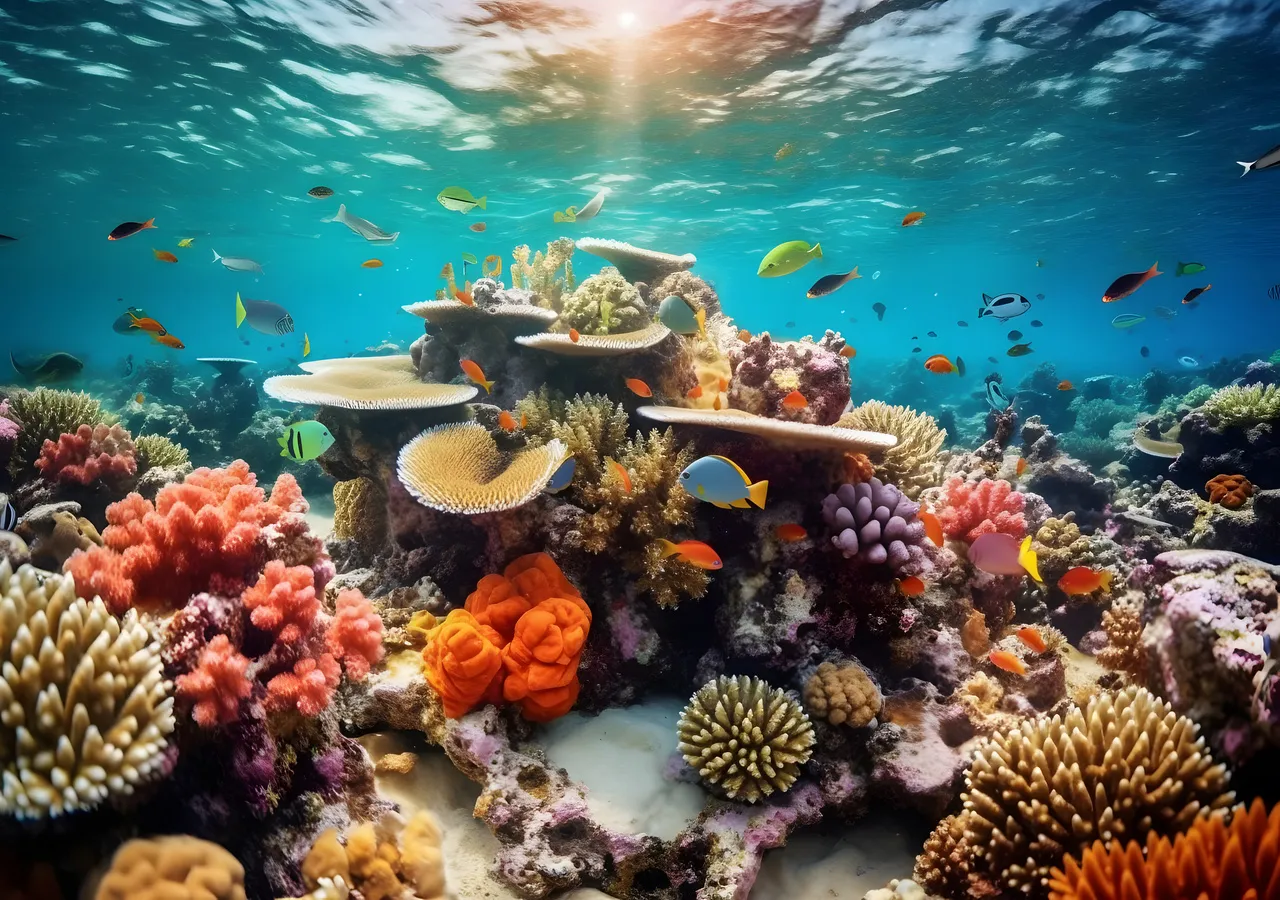
India, with a coastline of over 7,500 kilometres and exclusive economic zone waters spanning more than 2 million square kilometres, has a direct stake in ocean biodiversity research. The Indian Ocean — the least explored of the world's major oceans — is home to unique ecosystems including the Lakshadweep and Andaman coral reefs, the Gulf of Mannar biosphere reserve, and deep-sea habitats that remain largely unstudied.
Indian marine research institutions, including the National Institute of Oceanography (NIO) in Goa and the Centre for Marine Living Resources and Ecology (CMLRE) in Kochi, have contributed to global biodiversity databases, but India's deep-ocean exploration capabilities remain limited. The government's Deep Ocean Mission, launched in 2021 with a budget of Rs 4,077 crore, aims to develop a manned submersible capable of reaching 6,000 metres — a capability that would dramatically expand India's ability to discover and document its own marine biodiversity.
The Ocean Census findings also have practical implications for India's blue economy. Many marine organisms produce unique chemical compounds with pharmaceutical potential — anti-cancer agents, antibiotics, and anti-inflammatory molecules have all been discovered in ocean species. Documenting biodiversity is the essential first step toward tapping this biochemical potential.
Why ocean biodiversity matters now
The discoveries come at a critical moment for ocean conservation. Climate change is warming ocean waters, acidifying marine environments, and disrupting the ecosystems that billions of people depend on for food and livelihoods. The International Union for Conservation of Nature estimates that nearly 10 percent of marine species are at risk of extinction, but that figure is based only on species that have been formally described.
"You cannot protect what you do not know exists," has become a refrain among marine biologists. Each newly discovered species adds to the case for marine protected areas, sustainable fishing practices, and international agreements to limit deep-sea mining before ecosystems are irreversibly damaged.
The Ocean Census programme plans to continue its expeditions through 2030, with a target of documenting at least 100,000 new species. At the current pace, that target is within reach — but only if the funding, political will, and international cooperation keep pace with the scale of what remains undiscovered beneath the waves.
Sources: Ocean Census (Nippon Foundation-Nekton), Science Times, World Conference on Marine Biodiversity 2026, Sciencing.com, Nature
See also: NASA ISS Air Leak Worsens: Crew Moved to Safe Haven, Risky R · JUNO Neutrino Observatory Delivers First Results: Nature Cov
Sources
- Nature — nature.com
- NASA — nasa.gov
- Voxlogue editorial research