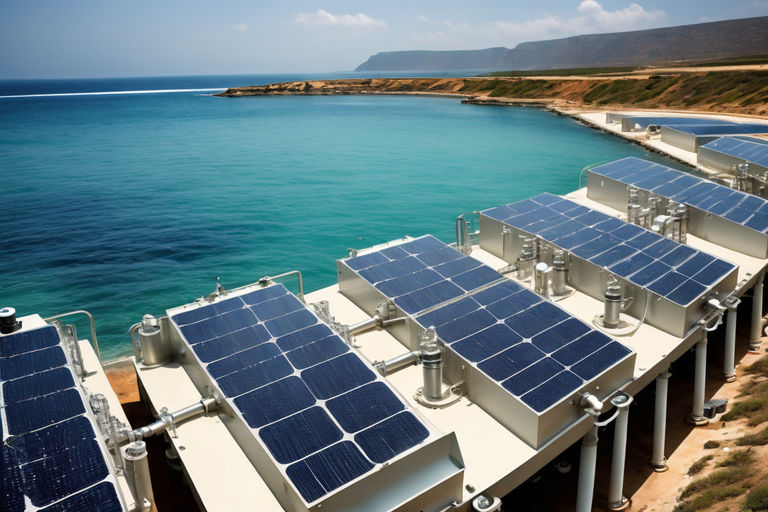
Scientists have developed a breakthrough solar desalination system that turns seawater into drinking water without creating the environmentally damaging brine waste that plagues conventional desalination plants, according to research published in May 2026.
The system uses specially designed laser-textured metal panels that harness sunlight to evaporate water while automatically moving salt away from the evaporation surface — solving the two biggest problems in solar desalination: efficiency and salt buildup.
Also read: 1,121 new marine species discovered in a single year
How It Works: Laser-Textured Solar Panels
The technology uses metal panels with a laser-etched surface texture that maximizes solar absorption and water wicking. When seawater is applied to the panels, sunlight heats the water and causes evaporation. The unique surface texture creates capillary action that continuously draws fresh seawater to the surface while pushing concentrated salt away from the evaporation zone.
This self-cleaning mechanism is the key innovation. In conventional solar stills, salt accumulates on the evaporation surface and quickly blocks sunlight, reducing efficiency to near zero within hours. The new design maintains consistent performance over extended periods without manual cleaning or chemical treatment.
The research team demonstrated that the panels can produce up to 20 liters of fresh water per square meter per day under natural sunlight — comparable to conventional reverse osmosis systems but without electricity, pumps, or brine discharge.
The Brine Problem: Why It Matters
Conventional desalination — primarily reverse osmosis — produces concentrated brine as a byproduct, which is typically discharged back into the ocean. This brine, which is roughly twice as salty as seawater, sinks to the seafloor and creates dead zones where marine life cannot survive. Globally, desalination plants produce 142 million cubic meters of brine daily.
The new solar system eliminates this problem entirely. The small amount of salt produced is a dry crystalline solid that can be collected and used as industrial salt — turning waste into a resource. The system has zero liquid discharge, meaning no brine enters the environment.
Also read: Staple-shaped nanoparticles create strong flexible material
Why This Breakthrough Matters for India
India faces acute water stress. With 18 percent of the world population but only 4 percent of its water resources, the country is classified as water-stressed by the UN. Coastal cities like Chennai, Mumbai, and Visakhapatnam have faced water crises in recent years, and climate change is expected to worsen the situation.
India has 7,500 kilometers of coastline, giving it abundant access to seawater. Solar desalination — especially a system that requires no electricity, no chemicals, and produces no brine — could be deployed at scale along Indias coast.
The technology is particularly promising for remote coastal and island communities that lack grid electricity and piped water infrastructure.