Venezuela's interim President Delcy Rodríguez declared a nationwide state of emergency on Wednesday after two powerful earthquakes struck the country's northern region within minutes of each other, causing widespread destruction in the capital Caracas and triggering tsunami advisories across the Caribbean.
The first earthquake, measuring 7.2 in magnitude, struck near the coastal town of Morón in Yaracuy state at approximately 3:04 PM local time. Just minutes later, a second — and larger — quake of 7.5 magnitude hit the same region, making it the most powerful earthquake to strike Venezuela in over a century, according to the United States Geological Survey (USGS).
Death Toll and Destruction Mount in Caracas
At least 32 people have been confirmed dead, with dozens more injured and an unknown number still trapped under rubble as rescue operations continue through the night. Entire sections of residential buildings in Caracas' 23 de Enero neighbourhood collapsed, trapping families as they attempted to flee their homes. The city's main airport was forced to close indefinitely after cracks appeared on the runway and terminal structure. Residents described scenes of panic as walls buckled and furniture tumbled from upper floors. Power outages were reported across multiple states, and communications networks remain intermittent, hampering coordination of rescue efforts.

Regional Tsunami Advisories Issued
The USGS initially triggered tsunami warnings for Puerto Rico and the US Virgin Islands, with the National Weather Service's Tsunami Warning System alerting residents along the Caribbean coastline to prepare for potential sea-level fluctuations and hazardous currents. While the initial tsunami threat has since been downgraded to an advisory, authorities in Venezuela, Aruba, Curaçao, and Colombia have urged coastal communities to remain vigilant and avoid beach areas. Colombia's disaster management agency reported minor sea-level changes along its northern coastline but confirmed no casualties on its side of the border.
India Offers Assistance as Modi Expresses Solidarity
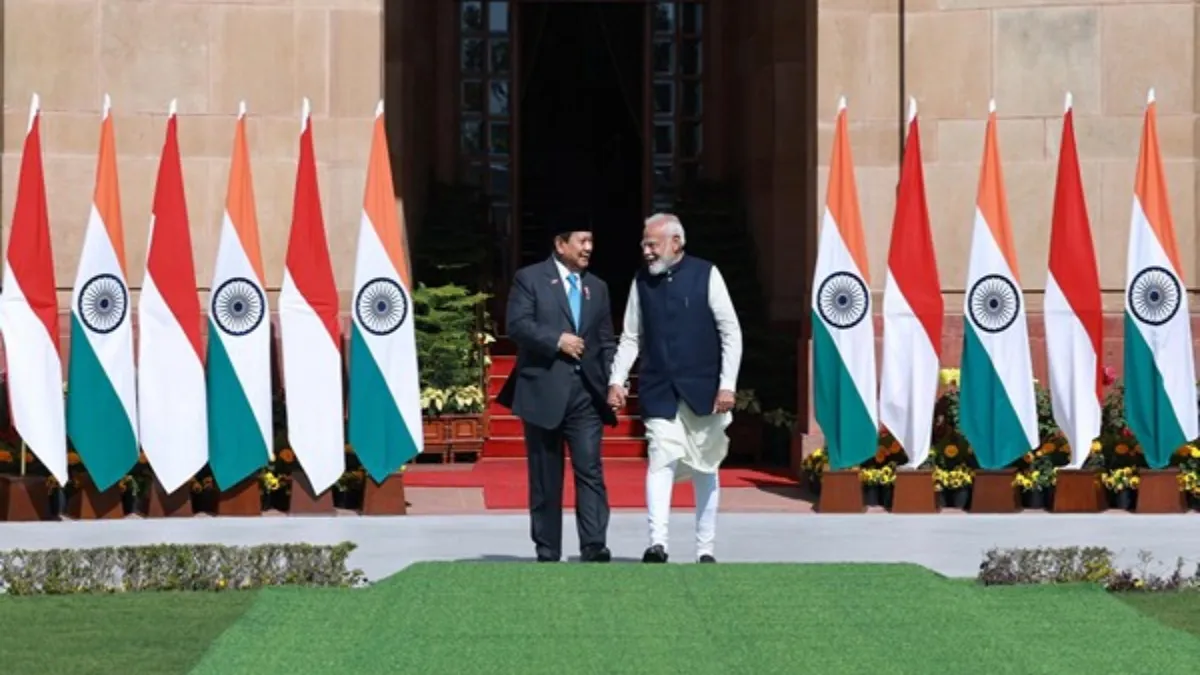
Prime Minister Narendra Modi expressed deep sorrow over the tragedy and confirmed that India stands ready to provide all possible assistance to the Venezuelan people. In a post on X (formerly Twitter), Modi wrote: "Deeply saddened by the devastating earthquakes in Venezuela. India extends heartfelt condolences to the families of the victims and stands in solidarity with the government and people of Venezuela. We pray for the speedy recovery of the injured." Following the earthquakes, Venezuela's Foreign Minister reached out to the Indian embassy in Caracas to coordinate potential relief efforts, including medical supplies, search-and-rescue teams, and temporary shelter materials.
Geological Context: Why Was This Earthquake So Powerful?
Venezuela sits along the boundary between the Caribbean and South American tectonic plates, a region known for significant seismic activity. The quakes occurred at a shallow depth of approximately 13 kilometres, which amplified surface shaking and contributed to the severe structural damage. According to the USGS, shallow earthquakes — those occurring less than 70 kilometres beneath the surface — tend to cause far more destruction than deeper ones because the seismic energy has less distance to travel before reaching populated areas. The last earthquake of comparable magnitude in this region was the 7.3-magnitude event near Sucre in August 2018, though the proximity of this week's epicenters to densely populated urban centres has made the current disaster significantly more destructive.
International Response and Humanitarian Concerns
The United Nations Office for the Coordination of Humanitarian Affairs (OCHA) has activated its emergency response protocol, offering technical assistance and logistical support to Venezuelan authorities. The International Federation of Red Cross and Red Crescent Societies has deployed assessment teams to the worst-hit areas. However, Venezuela's ongoing economic challenges — including fuel shortages, limited heavy machinery, and reduced hospital capacity — are expected to complicate rescue and relief operations. Emergency shelters have been set up in schools and sports centres across Caracas, Valencia, and Maracay, with the government appealing for international medical aid, field hospitals, and structural engineers to assess building stability in the aftermath of the quakes.
Impact on Energy and Infrastructure
Venezuela is home to some of the world's largest oil reserves, and the earthquakes struck near critical energy infrastructure in the Yaracuy and Carabobo regions. While state oil company PDVSA has reported no major damage to its primary extraction and refining facilities, several pipeline connections in the affected zone have been shut down as a precautionary measure. The temporary closure of Caracas' Simón Bolívar International Airport has disrupted both domestic and international travel, with flights diverted to Valencia and Maracaibo. Authorities warn that aftershocks — of which at least 20 have been recorded so far — could continue for days, further destabilising already weakened structures.
For related Voxlogue context, read 6.7-Magnitude Earthquake Strikes Indonesia Sulawesi Island, and Lucknow Fire Tragedy: 15 Dead, 9 Injured as Commercial Building Blaze Prompts SIT Probe by CM Yogi Adityanath.