In a groundbreaking achievement in tissue engineering, scientists have successfully implanted the first lab-grown oesophagus in living pigs, marking a major step toward treating children born with oesophageal atresia — a condition where the oesophagus does not develop properly. The research, published in March 2026 and reported by Sky News and EurekAlert, represents a significant advance in regenerative medicine.
The medical problem being solved
Oesophageal atresia is a congenital condition affecting approximately 1 in 2,500 newborns worldwide, where the oesophagus fails to connect properly to the stomach. Current treatment involves complex surgical reconstruction using sections of the patient's own intestine or stomach tissue, but these procedures carry significant risks including leakage, stricture formation, and long-term digestive problems. For severe cases, children may require multiple surgeries and lifelong medical management. A lab-grown replacement oesophagus would offer a dramatically better solution.
How the lab-grown oesophagus was created
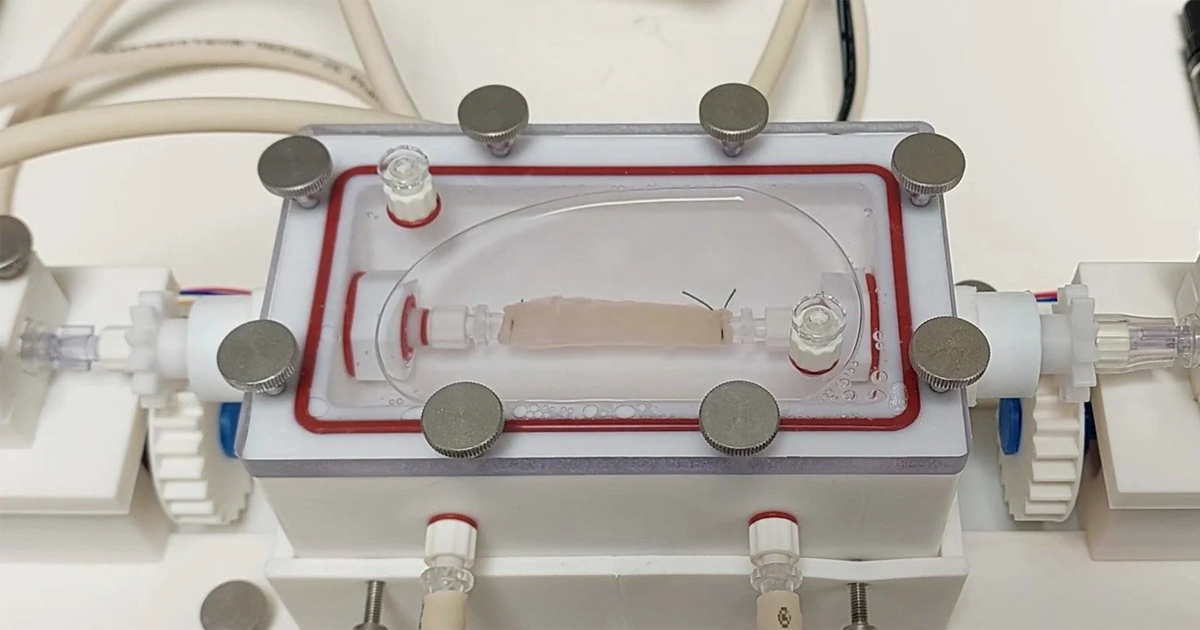
Scientists engineered functional oesophageal tissue by seeding donor-derived cells onto a biodegradable scaffold that mimics the structure of a natural oesophagus. The scaffold gradually degrades as the cells grow and organize themselves into the layered structure characteristic of natural oesophageal tissue — complete with a mucosal lining, smooth muscle layers, and a supportive extracellular matrix. The tissue was grown in a bioreactor that provided mechanical stimulation to mimic the stretching and contracting that a natural oesophagus experiences during swallowing.
Successful implantation in pigs
In the landmark animal study, the lab-grown oesophagi were surgically implanted into pigs, replacing damaged or missing sections of their natural oesophagi. The transplanted tissues successfully integrated with the animals' blood supply, maintained their structural integrity, and began functioning within weeks. The pigs were able to eat and swallow normally, demonstrating that the engineered tissue could perform the essential mechanical functions of a natural oesophagus. Follow-up examinations showed that the tissue continued to mature and develop blood vessel networks after implantation.
Timeline for human clinical trials
The researchers are now planning the next phase of development, which would involve refining the manufacturing process and conducting longer-term safety studies in animals. Human clinical trials are expected to begin within the next 3-5 years, pending regulatory approval. The lab-grown oesophagus approach offers particular promise for pediatric patients, where the engineered tissue could grow with the child, eliminating the need for multiple replacement surgeries. The research team is also exploring whether the technique could be adapted for other hollow organs such as the trachea, bladder, and blood vessels.
The broader field of tissue engineering
This breakthrough comes amid rapid advances in regenerative medicine. Scientists have previously engineered lab-grown skin, bladders, and tracheas for human transplantation, but creating complex hollow organs like the oesophagus has proven more challenging due to its specialized structure and function. The success in pigs represents a validation of tissue engineering approaches for complex gastrointestinal organs. Other research teams are working on lab-grown livers, kidneys, and hearts, though these more complex organs face greater hurdles.
Significance for Indian healthcare
For India, where congenital birth defects affect an estimated 6-7% of all births, advances in tissue engineering could transform pediatric surgical care. India's leading medical research institutions, including the All India Institute of Medical Sciences and the Christian Medical College in Vellore, have been investing in regenerative medicine research. The lab-grown oesophagus technology, once proven in human trials, could be particularly valuable for India's public health system, where complex congenital surgeries are often beyond the reach of many families. Indian researchers have also been developing low-cost bioreactor systems that could make tissue engineering more accessible in resource-limited settings.
Sources: Sky News, EurekAlert, Nature, CERN Courier, BBC News