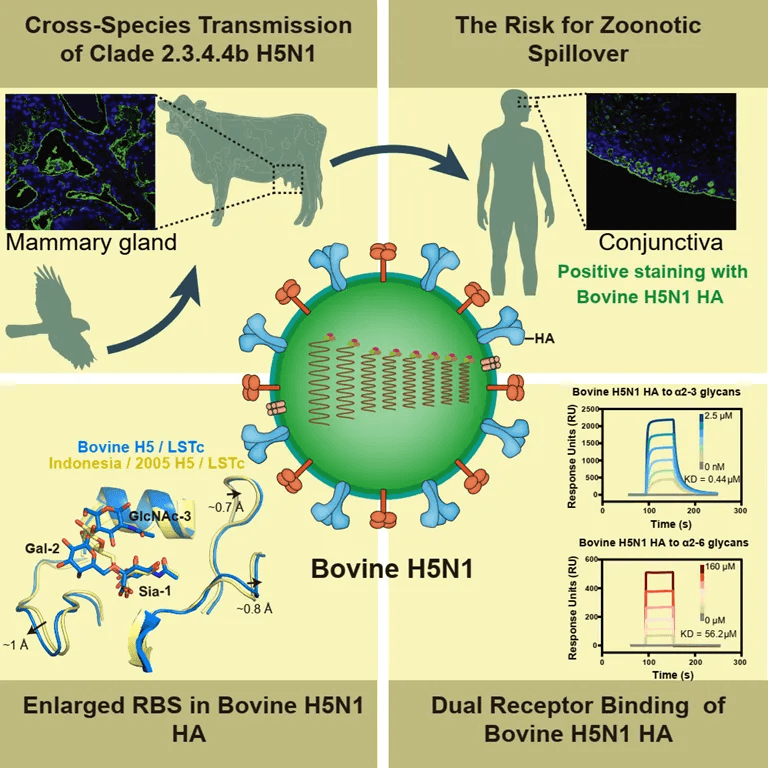
Scientists have finally solved the mystery of why the H5N1 bird flu virus attacks cows' udders instead of their lungs — a discovery that could help predict and prevent future cross-species disease jumps.
Published in a June 2026 study, researchers found that the H5N1 virus's preferred cellular receptors are concentrated in the mammary tissue of dairy cows, not in their respiratory tracts as would be expected for an influenza virus. This explains the unusual symptom pattern seen in infected herds, where milk production drops dramatically but respiratory symptoms are mild or absent.
Also read: 1,121 new marine species discovered in a single year
The H5N1 Cow Outbreak: A Timeline
The H5N1 bird flu outbreak in US dairy cattle was first detected in early 2024, surprising virologists worldwide. Influenza viruses typically target respiratory tissue, where they spread through coughing and sneezing. But infected cows showed only mild respiratory signs while experiencing sharp declines in milk production and changes in milk consistency.
The outbreak spread across multiple states, raising concerns about H5N1 adapting to mammals and potentially to humans. Several dairy workers contracted mild infections, but the virus showed no immediate signs of human-to-human transmission.
What the Research Found
The study, conducted by a collaborative team of virologists and veterinary scientists, used receptor-binding assays to map where H5N1 attaches in cow tissue. The results were unambiguous: the virus's hemagglutinin protein binds strongly to sialic acid receptors found in high density in mammary gland epithelial cells, while showing weak binding to respiratory tract cells.
This receptor tropism explains why the virus establishes a persistent infection in the udder — the mammary gland provides an ideal environment with the right receptors, a rich supply of nutrients, and a temperature that suits the virus. It also explains why the virus is shed in milk at high concentrations, creating a transmission route through contaminated milking equipment.
Also read: 100-year-old TB vaccine shows promise for diabetes
Implications for Pandemic Preparedness
The discovery has significant implications for pandemic surveillance. If H5N1 can infect cows' mammary glands, it has an unexpected evolutionary pathway. The virus could potentially adapt to mammalian hosts through dairy cattle — a species with intense human contact through milking, veterinary care, and meat processing.
Agricultural surveillance systems, the researchers argue, should now include regular testing of dairy herds for influenza viruses, with particular attention to milk samples. The receptor discovery also suggests that other mammals with mammary tissue vulnerabilities could be at risk.
For India, which has the world's largest dairy industry with over 300 million cattle and buffalo, the findings are particularly relevant. Indian dairy farmers should be aware of the biosecurity risks and monitor herds for unusual drops in milk production. The Indian government's animal husbandry departments should consider including influenza surveillance in their dairy health programs.
Sources: ScienceDaily, Nature, Reuters, US CDC, FAO