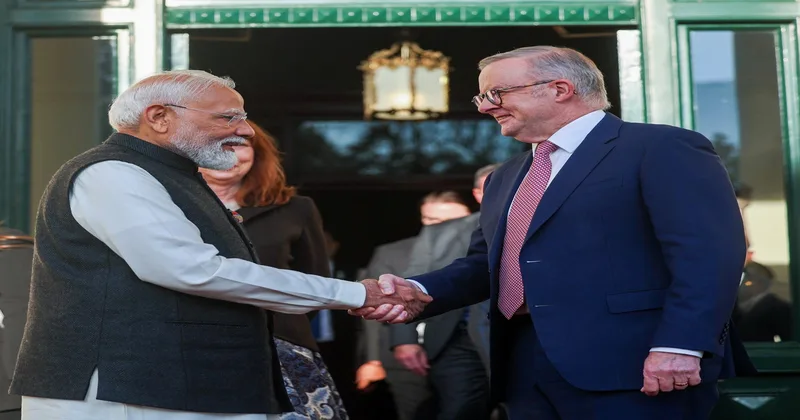
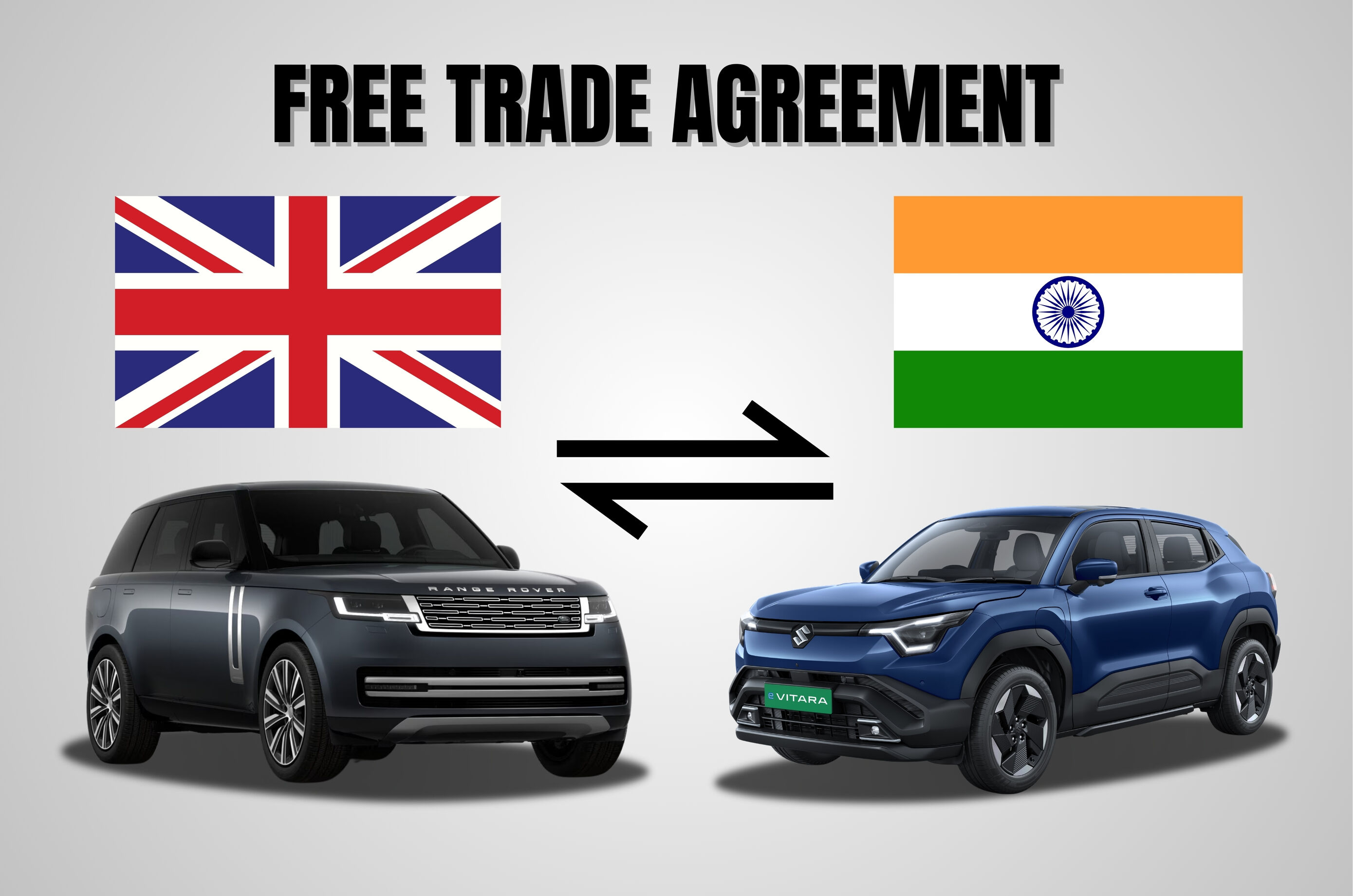
India and the United Kingdom have finalised the Comprehensive Economic and Trade Agreement (CETA), a landmark pact that will allow the import of 3.78 lakh British passenger vehicles at progressively lower duties over 15 years while completely shielding India's mass-market electric vehicle segment from foreign competition. The agreement, set to take effect on July 15, 2026, is expected to help double two-way commerce to $100 billion by 2030.
Lower Duties on British Car Imports
Under the agreement, India will progressively reduce import duties on British passenger cars from the current approximately 110% rate to as low as 10% under specified quota limits. In the first year, India will allow 20,000 conventional-engine cars from the UK at reduced duty rates. The annual quota will increase to 37,000 units by the fifth year across three engine-size categories before gradually declining to 15,000 units annually from the 15th year onwards, all at a concessional rate of 10%.
The breakdown by engine category is as follows: cars with engines exceeding 3,000cc (petrol) or 2,500cc (diesel) will have a first-year quota of 10,000 units at 50% duty. Vehicles with engines between 1,500cc and 3,000cc, alongside mass-market cars with engines up to 1,500cc, will each have a first-year quota of 5,000 units at duties lowered to 50% from the previous 66%.
Complete Protection for Mass-Market EVs
A critical feature of the pact is that India has not opened its market for vehicles priced below GBP 40,000 (CIF), ensuring complete protection for the mass-market EV segment where domestic manufacturers like Tata Motors and Mahindra & Mahindra are investing heavily. In the first five years, India grants no concessions for electric, hybrid, or hydrogen passenger cars. From the sixth year, such vehicles priced between GBP 40,000 and GBP 80,000 may enter at reduced duties under tightly controlled quotas — initially just 400 units per year for the higher price segment, gradually rising over time.
Opportunity for Indian EV Exports to UK
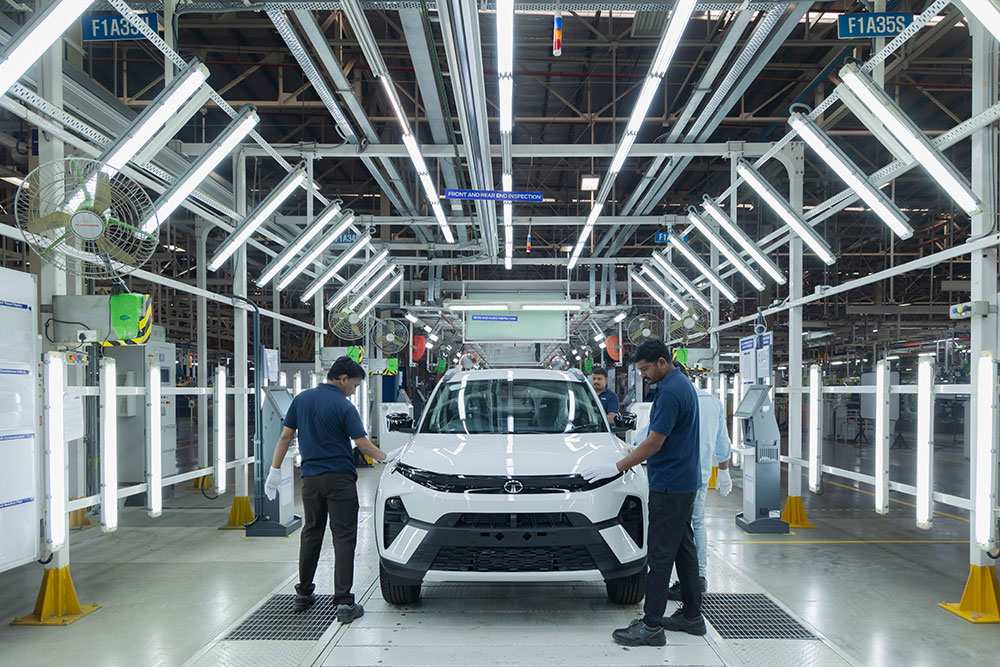
The agreement also opens a significant export channel for Indian automakers. From the sixth year, made-in-India electric, hybrid, and hydrogen passenger cars will enter the UK duty-free in price brackets ranging from GBP 20,000 to GBP 80,000. The total quota will expand to 88,000 units annually by the 15th year, with Tata Motors, Mahindra & Mahindra, and Maruti Suzuki positioned to benefit. Under GBP 20,000 and the GBP 20,000–40,000 segments will each have quotas of 34,000 units, while the GBP 40,000–80,000 segment will have 20,000 units.
Zero-Emission Two-Wheelers and Commercial Vehicles Excluded
The agreement explicitly excludes zero-emission two-wheelers, buses, and trucks from any commitment to reduce or eliminate customs duties, preserving India's policy flexibility to promote domestic manufacturing in these segments through production-linked incentive (PLI) schemes.
What This Means for India
The CETA represents a carefully calibrated approach to trade liberalisation in the automotive sector. While it opens India's premium car market to iconic British brands like Jaguar Land Rover and Rolls-Royce, it preserves the government's strategic priority of building domestic EV champions. For Indian consumers, this may eventually mean more competitive pricing in the luxury segment. For the economy, the agreement supports India's target of becoming a global EV manufacturing hub while leveraging access to the UK market to boost exports from Tata, Mahindra, and Maruti.
For related Voxlogue context, read India IT Industry Generates $10-12 Billion in AI Services Revenue, Reveals Nasscom, and India-UK Free Trade Agreement to Take Effect from July 15, Unlocking New Export Opportunities.