Israeli Prime Minister Benjamin Netanyahu has made a pointed intervention in a widening diplomatic debate, declaring that India — a nation of 1.4 billion people — offers Israel 'tremendous support' and deserves recognition as one of Israel's most significant allies. The remarks came as a direct rebuttal to US Vice President JD Vance, who earlier claimed that the United States was Israel's 'only true ally'.
Speaking on Fox News Sunday Briefing, Netanyahu said: 'We have some other friends, like a small country called India. It has 1.4 billion people, and boy, do we have tremendous support there.' He added that his Facebook page was flooded with messages of support from Indians, reflecting the deep cultural and strategic ties between the two nations.
Netanyahu Rejects 'Only Ally' Narrative
Vance had urged Israel to respect ongoing US-Iran peace talks and avoid actions that could destabilise the region. In response, Netanyahu acknowledged his good personal relationship with Vance but firmly declined to accept the framing of the US as Israel's singular ally. He noted that many world leaders reach out privately to express support, asking for Israeli expertise in cyber defence, artificial intelligence, and military technology.
'You know Israel is the number two country in cyber in the world, and our technology is so good. So the relations are not quite as they appear, and we have many, many friends,' Netanyahu said, underscoring the breadth of Israel's international partnerships beyond Washington.
India-Israel Strategic Partnership Deepens
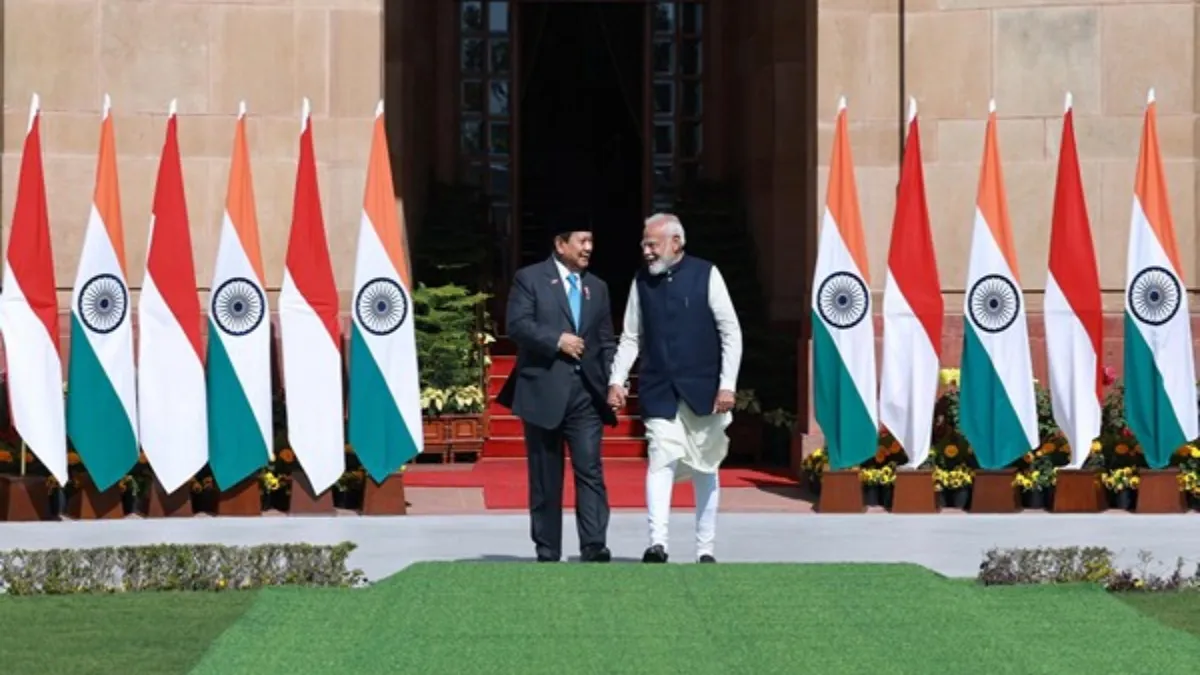
The remarks come at a time when India-Israel relations are at a historic high. In February 2026, Prime Minister Narendra Modi visited Israel, marking the first visit by an Indian PM to the country in nearly a decade. During the visit, the two sides signed agreements on artificial intelligence collaboration, defence technology transfers, and an investment protection treaty designed to boost bilateral trade, which currently stands at approximately $10 billion annually.
The India-Israel Bilateral Investment Agreement came into force earlier this year, unlocking new capital flows between the two economies. Israeli companies have been increasingly active in India's technology, agriculture, and defence sectors, while Indian IT firms have expanded their presence in Tel Aviv and Haifa.
Netanyahu's interview also coincided with the ongoing funeral proceedings for Iran's late Supreme Leader Ayatollah Ali Khamenei, who was killed in strikes on Tehran in February. India recently sent a delegation to Tehran to attend the funeral observances, carefully balancing its ties with Israel, Iran, and the United States.
India's Balancing Act in West Asia
India maintains traditionally warm relations with Iran, including strategic interests in the Chabahar port project, even as it deepens military and technology cooperation with Israel. Netanyahu's public embrace of India as a key ally may complicate New Delhi's delicate diplomatic posture in the region.
Foreign policy analysts note that India's approach to West Asia has historically been one of strategic autonomy, engaging with Israel, Iran, Saudi Arabia, and the UAE on separate tracks. The Netanyahu remarks place New Delhi in the spotlight, potentially accelerating the normalisation of public India-Israel strategic alignment.
Cyber and AI Cooperation as a Pillar
Netanyahu specifically highlighted Israeli expertise in cybersecurity and artificial intelligence as areas where other nations, including India, seek collaboration. Israel's cyber industry, the second-largest globally after the United States, generates over $10 billion in annual exports. The Israel National Cyber Directorate has partnered with Indian agencies on threat intelligence sharing and capacity building.
India's IT industry, generating $10-12 billion in AI services revenue, stands to benefit significantly from deeper cyber and AI cooperation with Israeli firms. The two countries are exploring a joint innovation fund focused on deep-tech startups in cybersecurity, agritech, and defence technologies.
Broader Diplomatic Implications
The Netanyahu-Vance exchange underscores growing tensions within the US-Israel relationship over the Biden-Trump administration's Iran policy. Vance had urged restraint, while Netanyahu defended Israel's right to self-defence and continued military operations in southern Lebanon aimed at neutralising Hezbollah threats.
'If you want to have peace, you better be able to protect yourself against those who want to annihilate you,' Netanyahu said, in remarks that resonated with both Israeli domestic opinion and India's own national security doctrine.
Political observers in New Delhi note that India's own terrorism concerns and its stance on cross-border threats align closely with Israel's security-first approach, making the partnership natural despite occasional diplomatic frictions over Palestine.
What This Means for the Quad and I2U2
Netanyahu's public embrace of India also has implications for broader minilateral frameworks. India is part of the I2U2 grouping that includes Israel, the UAE, and the United States, focusing on joint infrastructure and technology investments. A stronger India-Israel bilateral axis reinforces the I2U2 framework and potentially opens the door for greater India-Israel coordination in Africa and the Indo-Pacific.
The UAE, which normalised ties with Israel under the Abraham Accords, has welcomed India's growing role in West Asian diplomacy. The trilateral India-Israel-UAE economic corridor, announced in 2023, is operational and facilitating trade flows worth billions.
FAQ
What did Netanyahu say about India?
Netanyahu said India, with its 1.4 billion people, offers Israel 'tremendous support' and is a significant friend, countering JD Vance's claim that the US is Israel's only true ally.
Why did Netanyahu make these remarks?
Netanyahu was responding to US Vice President JD Vance, who had urged Israel to respect US-Iran peace talks and suggested the US was Israel's only reliable ally.
What is the current state of India-Israel relations?
India-Israel relations are at a historic high, with PM Modi's February 2026 visit, a bilateral investment agreement, and growing collaboration in AI, cyber defence, and defence technology.
How does this affect India's relations with Iran?
India balances ties with Israel and Iran carefully, maintaining strategic projects like Chabahar port while deepening security cooperation with Israel. Netanyahu's remarks may complicate but not derail this balancing act.
Sources
Sources: India Today, The Indian Express, The Tribune, Fox News Sunday Briefing, ANI