A Decade-Old Mystery Gets Fresh Evidence
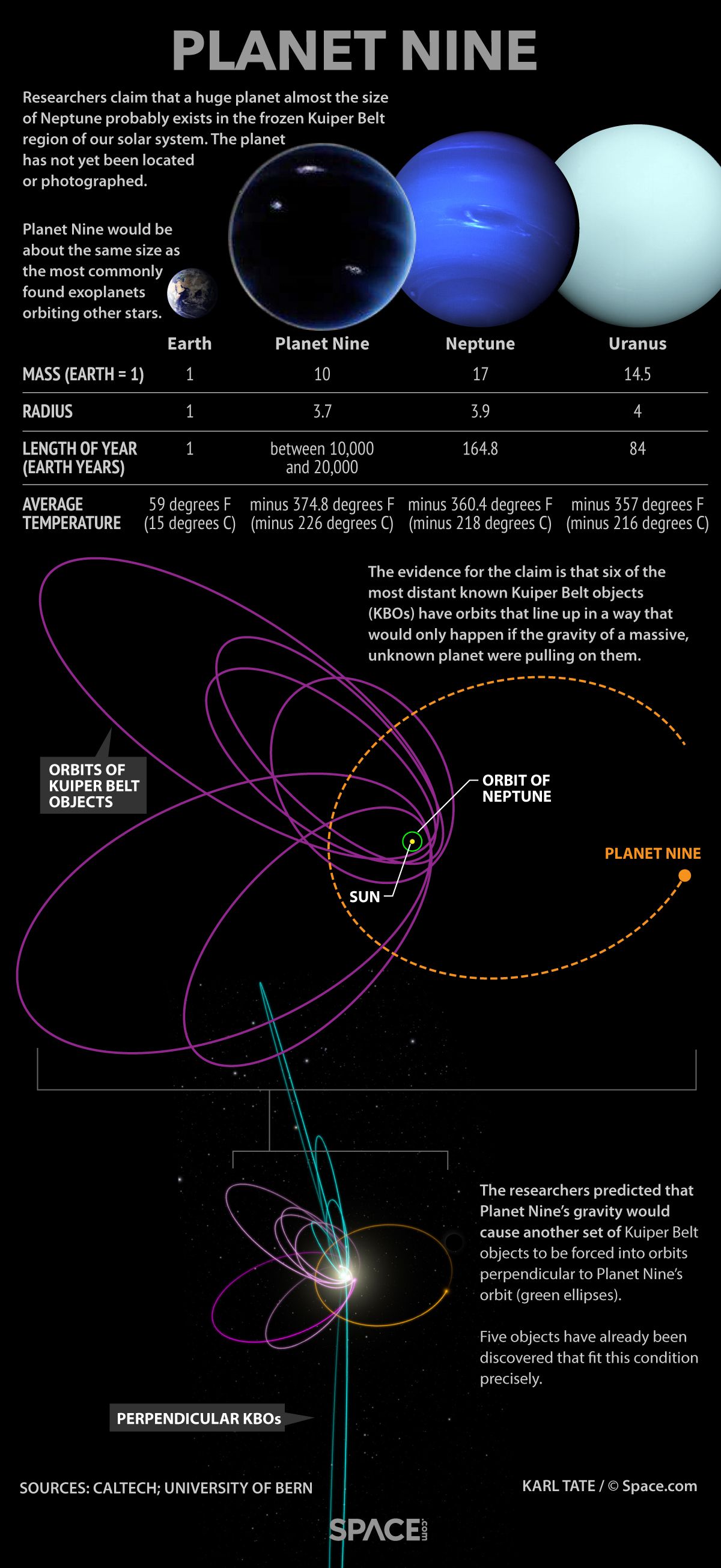
Astronomers have uncovered compelling new evidence for the existence of Planet Nine, the hypothetical super-Earth believed to be lurking in the outer reaches of our solar system. The discovery, reported in mid-June 2026, adds a dramatic twist to a search that has captivated planetary scientists since Caltech researchers Konstantin Batygin and Mike Brown first proposed the planet existence in 2016.
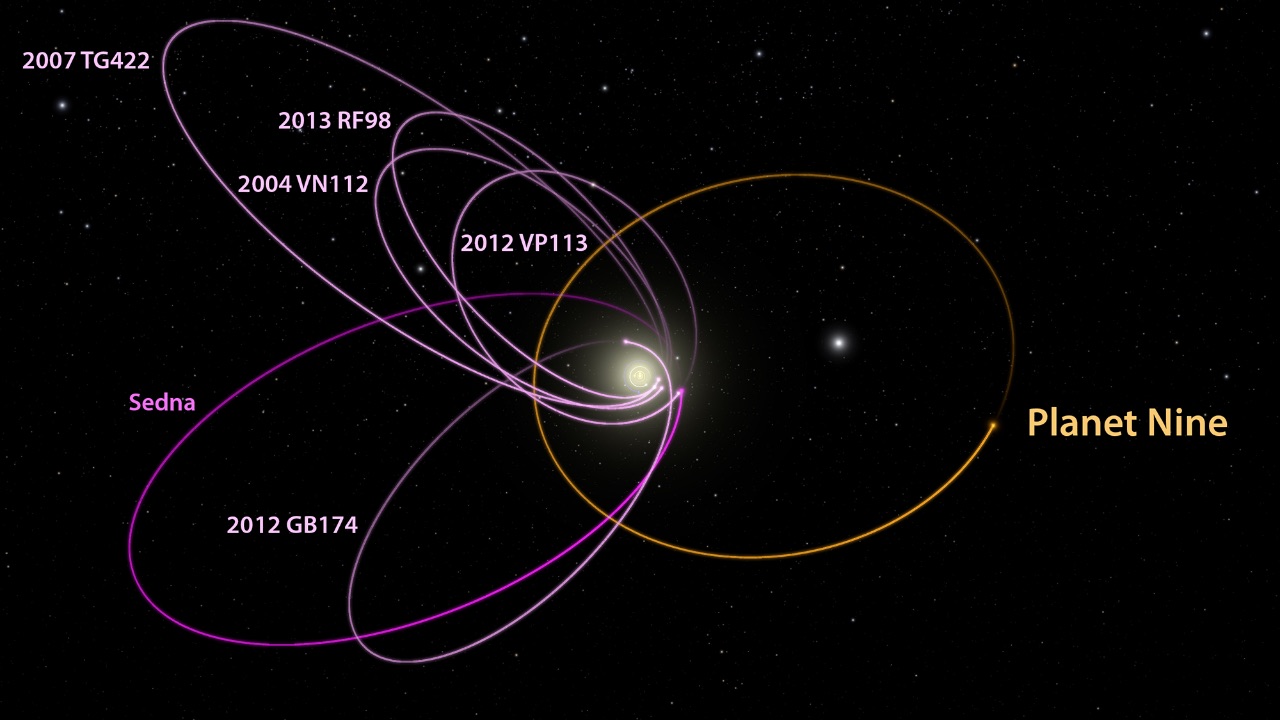
The new evidence comes from detailed orbital analysis of extreme trans-Neptunian objects (ETNOs) — icy bodies beyond Neptune whose strange, clustered orbits were the original smoking gun for Planet Nine. The latest observations, using data from the Subaru Telescope in Hawaii and the Vera C. Rubin Observatory in Chile, reveal an even stronger clustering pattern that is extraordinarily unlikely to occur by chance alone.
What the Evidence Shows
The research team identified a new population of distant Kuiper Belt objects whose orbital alignments cannot be explained by the known gravitational influence of the eight confirmed planets. Statistical modeling places the probability of this clustering occurring randomly at less than 0.02%, strengthening the case that a massive, unseen planet — estimated at 5 to 10 times Earth mass — is shepherding these objects into their unusual orbits.
If confirmed, Planet Nine would be the first new planet discovered in our solar system since Neptune in 1846, and the first discovered through mathematical prediction rather than direct observation. Like the 50-year search for the Milky Way missing black hole wind, the hunt for Planet Nine illustrates how modern astronomy combines computational modeling with patient observation to solve long-standing mysteries.
Why It Has Taken So Long
Planet Nine, if it exists, orbits at a staggering distance of 400 to 800 astronomical units (AU) from the Sun — so far that sunlight takes more than 2.5 days to reach it. At that distance, even a planet several times the mass of Earth reflects almost no light, making direct imaging extraordinarily difficult. The Vera C. Rubin Observatory, which began full science operations in 2025, is the most powerful tool yet deployed for the search, capable of surveying the entire visible sky every few nights with unprecedented sensitivity.
The search also connects to broader questions about how much of our own cosmic backyard remains unexplored. Just as over 90% of ocean species remain undiscovered, the outer solar system may harbor planets and objects that have been hiding in plain darkness for billions of years.
What Comes Next
The research team has narrowed the search region to a specific arc of the sky, and the Rubin Observatory is now conducting a targeted survey of that area. If Planet Nine exists, astronomers estimate it could be directly imaged within the next two to three years. The discovery would fundamentally reshape our understanding of solar system formation and the prevalence of super-Earth planets — the most common type of exoplanet found around other stars, yet mysteriously absent from our own inner solar system.