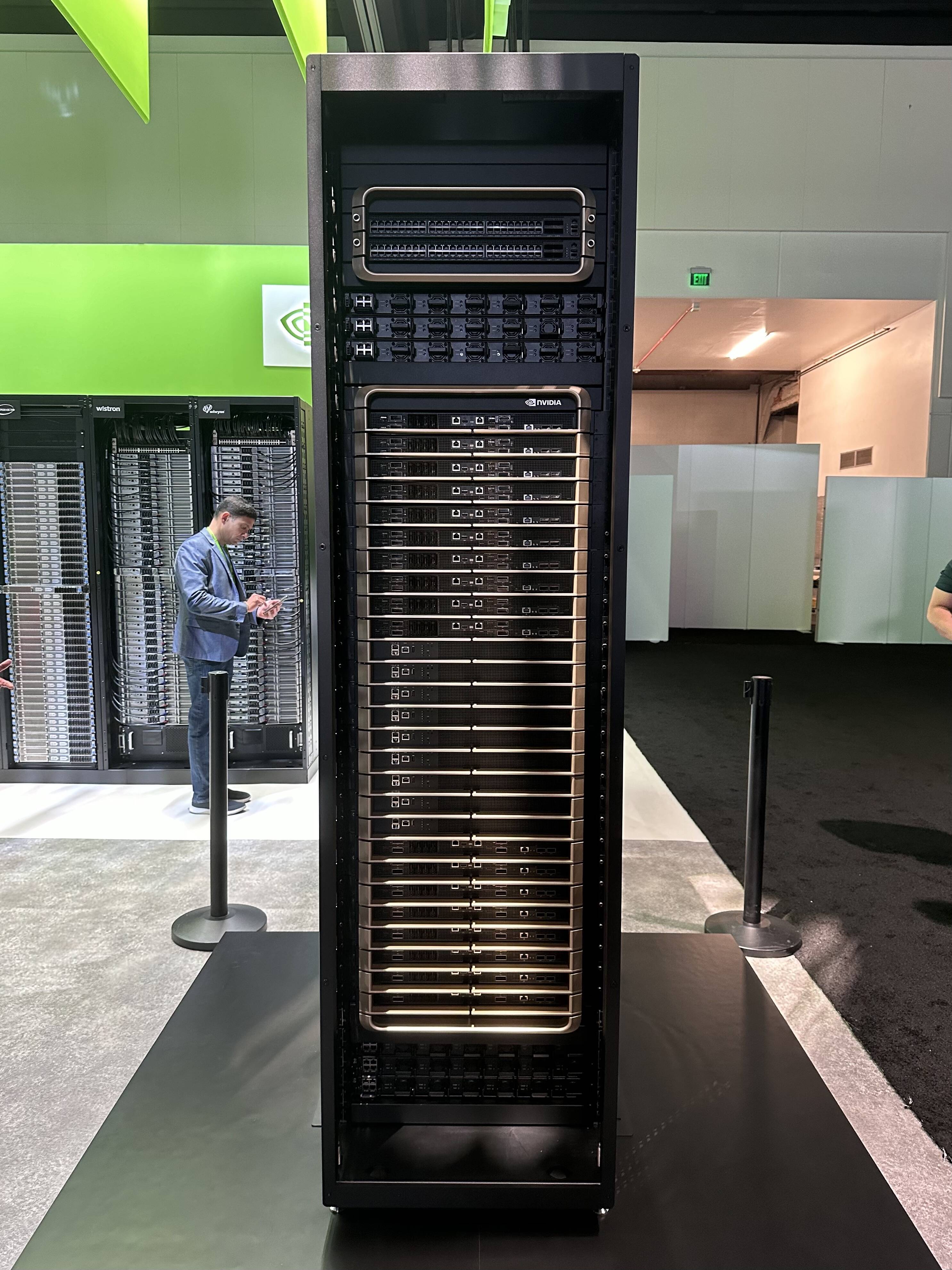
Nvidia's next-generation Vera Rubin-based VR200 NVL72 rack will cost hyperscale cloud providers approximately $7.8 million per unit — a staggering 485% increase in memory costs and nearly double the $4 million price tag of the prior GB300 generation, according to a new report from Morgan Stanley Research. The cost surge underscores the escalating financial demands of frontier AI infrastructure and raises questions about the sustainability of current scaling trajectories for even the deepest-pocketed tech giants.
Breaking Down the $7.8 Million Price Tag
Morgan Stanley's analysis reveals that memory now accounts for approximately 25% of the total system cost, or about $2 million per rack, driven by a threefold increase in LPDDR5X content and around $1 million in 3D NAND storage. Each Rubin GPU is priced at approximately $55,000 for volume hyperscaler purchases. When fully configured with NVLink switches, networking fabric, cooling infrastructure, and integration, the total per-rack cost reaches $7.8 million. The 485% memory cost increase is the single largest component of the price escalation, driven by the move to higher-bandwidth, higher-capacity memory configurations necessary to feed the insatiable data requirements of next-generation AI models being trained on trillions of parameters.
Implications for Hyperscalers and AI Economics
For hyperscale cloud providers — Microsoft, Amazon, Google, and Oracle — the escalating cost per rack is driving a fundamental reassessment of AI infrastructure economics. Microsoft's Azure AI infrastructure budget for 2027 is already projected to exceed $50 billion, with Nvidia hardware accounting for the majority. The $7.8 million per-rack cost means that a typical 100,000-GPU cluster — now standard for frontier model training — would cost over $4 billion in hardware alone, excluding data centre construction, power infrastructure, and operational costs. This concentration of hardware spending among a handful of hyperscalers raises concerns about market concentration in AI capabilities. Smaller AI labs and national AI initiatives, particularly in emerging economies, face an increasingly prohibitive barrier to entry in frontier model development.
India's AI Infrastructure Challenge
For India's ambitions to build sovereign AI capabilities, the Nvidia cost escalation presents a significant headwind. The IndiaAI Mission, with its budget of Rs 10,372 crore, would struggle to acquire even a single fully-configured rack at these prices. Indian AI startups and research institutions are increasingly turning to alternative approaches: leveraging open-source models, optimising inference rather than training infrastructure, and exploring partnerships with hyperscalers for subsidised compute access. The Reliance-Meta partnership building a 168MW AI data centre in Jamnagar and the recently announced reliance on GPU-as-a-service models reflect a pragmatic Indian approach — building the application layer atop hyperscaler infrastructure rather than competing at the frontier hardware level. This cost reality also strengthens the case for India's focus on AI application development and fine-tuning rather than pre-training foundation models from scratch.
Industry Response and Alternatives
The cost explosion has accelerated interest in alternative AI hardware architectures. AMD's $1,499 AI Box, launched earlier this year, targets a dramatically lower price point, while custom AI chips from Google (TPU v6), Amazon (Trainium 3), and OpenAI's recently unveiled Jalapeño chip designed with Broadcom offer potential long-term alternatives to Nvidia's ecosystem dominance. However, Nvidia's CUDA software moat and the entrenched optimisation of AI frameworks for its hardware mean that meaningful competition in the hyperscaler segment is unlikely before 2028-2029. In the interim, AI training costs are expected to continue rising, potentially slowing the pace of frontier model development to all but the wealthiest players.
For related Voxlogue context, read India IT Industry Generates $10-12 Billion in AI Services Revenue, Reveals Nasscom, and Gold and Silver Prices Crash in June 2026: Fed Hawkish Hold, Strong Dollar Drive Precious Metals Selloff.