Crude Falls Below Key Support Levels
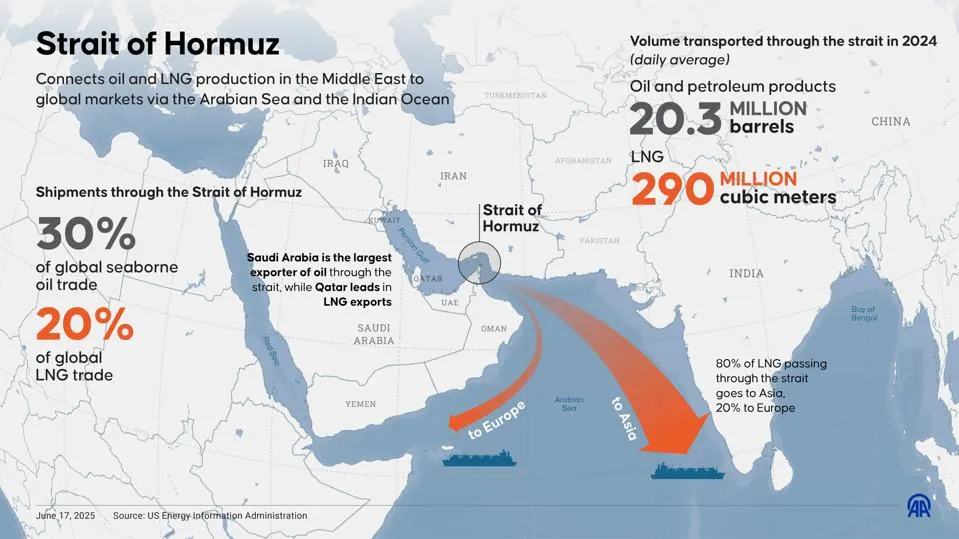
Oil prices extended their decline on Wednesday as expectations grew for a smoother flow of crude through the Strait of Hormuz following progress in US-Iran negotiations. Brent crude futures fell below $77 per barrel, continuing a downward trend that has accelerated since the announcement of a 60-day ceasefire between the US and Iran earlier this month.
West Texas Intermediate crude also declined, trading near $73 per barrel. The decline reflects easing supply disruption fears and growing confidence that the Strait of Hormuz — through which approximately 20 percent of the world's oil passes — will remain open. Oil prices had spiked to over $95 per barrel during the height of military tensions in May.
Price Impact and Global Outlook
The decline in oil prices represents a significant reversal from the war-driven surge earlier this year. Analysts at Goldman Sachs and Morgan Stanley have revised their oil price forecasts downward, with Goldman now expecting Brent to average $75 per barrel in the second half of 2026, down from an earlier forecast of $85. The easing reflects both the Hormuz reopening and slowing global demand growth, particularly from China where economic activity has softened.
| Metric | Peak (May 2026) | Current | Change |
|---|---|---|---|
| Brent Crude | $95.40 | $76.80 | -19.5% |
| WTI Crude | $91.20 | $73.10 | -19.8% |
| Petrol in India (Delhi) | Rs 107.50/L | Rs 100.20/L | -6.8% |
| Diesel in India (Delhi) | Rs 96.80/L | Rs 90.40/L | -6.6% |
India Benefits from Lower Oil Prices
India stands to be one of the biggest beneficiaries of declining oil prices. The country imports roughly 85 percent of its crude oil requirements, making it highly sensitive to global energy prices. Every $10 per barrel decline in crude prices improves India's trade balance by approximately $15 billion annually and reduces the current account deficit by 0.5 percent of GDP. The relief comes at a crucial time: the Indian rupee has been under pressure, hitting record lows against the US dollar, and the Reserve Bank of India has been grappling with inflation that remained above its 4 percent target partly due to energy costs. Lower oil prices give the RBI more room to consider rate cuts, which would boost economic growth.
Sectoral Impact within India
Lower crude prices benefit multiple sectors in India. Aviation stocks typically rally on lower fuel costs, as jet fuel accounts for 30 to 40 percent of airline operating expenses. Paint companies, which use crude derivatives as raw materials, also benefit. Oil marketing companies like IOC, BPCL, and HPCL may see improved margins on automotive fuels if retail prices do not fall proportionally. However, upstream producers like ONGC and Oil India face margin pressure as realizations decline. The fertilizer sector, which uses natural gas as feedstock, also benefits from lower energy prices.
For related Voxlogue context, read Brent Crude Falls Below $77 as Strait of Hormuz Reopening Nears — India to Benefit From Lower Oil Prices, and India IT Industry Generates $10-12 Billion in AI Services Revenue, Reveals Nasscom.