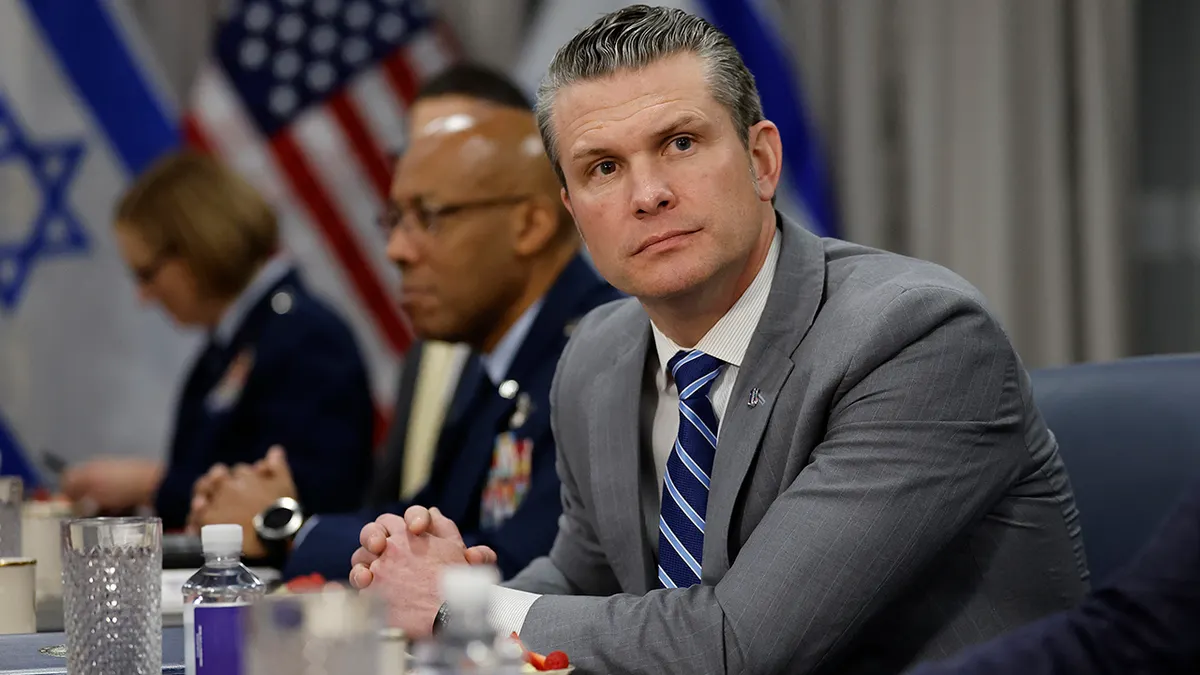
US Defense Secretary Pete Hegseth has announced a six-month Pentagon review of American forces in Europe, directly criticizing NATO allies for failing to provide base access for US military operations against Iran. The review, which could reshape the US military footprint in Europe, comes amid growing transatlantic tensions over burden-sharing and strategic priorities.
What Hegseth Said
Speaking at NATO headquarters in Brussels, Hegseth accused European allies of prioritizing "gender equity and climate change over defense" and failing to provide access to bases that the US needed for strikes on Iran. He warned that the outcome of the review would depend on how quickly European allies take responsibility for their own security.
NATO Secretary-General Mark Rutte acknowledged the criticism but noted a "significant increase" in European defense spending in recent years. Several European diplomats expressed concern that the review could undermine NATO's collective security guarantee.
What the Review Means
| Aspect | Current | Under Review |
|---|---|---|
| US troops in Europe | ~100,000 | Potential reduction |
| NATO rapid response | 40,000-troop force | European-led alternative |
| Nuclear sharing | US nukes in Europe | Will remain (Hegseth confirmed) |
| Base access policy | Case-by-case approval | Pre-positioned agreements sought |
India Angle: What This Means for New Delhi
India, which has historically maintained a strategic balancing act between US-led Western alliances and its own defence partnerships with Russia, watches NATO dynamics closely. A reduction in US force presence in Europe could shift American strategic focus toward the Indo-Pacific, potentially benefiting India's Quad partnership with the US, Japan, and Australia.
However, any perception of NATO weakening could embolden China and Russia, complicating India's border management with China and energy security ties with Russia. India's defence establishment is also assessing whether reduced US presence in Europe might accelerate European defence cooperation with India, particularly in naval and cyberspace domains.
Reaction from Allies
Germany's defence minister called the review "unhelpful" at a time when Europe faces multiple security challenges. France emphasized European strategic autonomy, while Poland — one of the few NATO members meeting the 2% GDP defence spending target — offered to host additional US forces if the review leads to a redistribution within Europe.
For related Voxlogue context, read US Suspends Iran Oil Sanctions Till August After Switzerland Deal — What It Means for Global Energy, and Oil Prices Hit Three-Month Low as US-Iran Peace Deal Raises Hormuz Reopening Hopes.