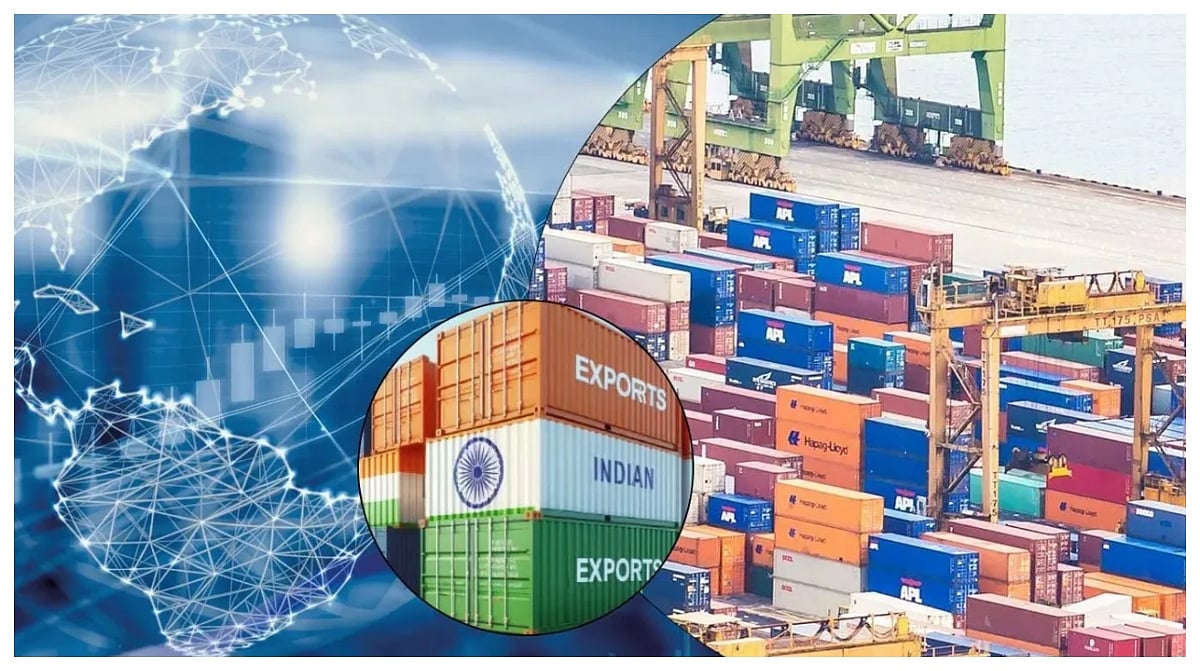
India's merchandise exports surged 18% year-on-year to $45.2 billion in May 2026, driven by strong growth in engineering goods, petroleum products, and pharmaceuticals, according to commerce ministry data released this week. However, the trade deficit widened to $28.21 billion as imports — particularly gold, crude oil, and electronics — grew at an even faster pace, reflecting the competing dynamics of India's expanding economy and its energy import dependence.
Export Growth Drivers
Engineering goods remained India's top export category, with shipments rising 15.3% to $9.8 billion, driven by strong demand from the US and European markets for auto components, machinery, and industrial equipment. Petroleum product exports grew 22% to $6.2 billion, boosted by higher global refining margins, though the benefit was partially offset by increased crude import costs. Pharmaceutical exports rose 12% to $2.8 billion, continuing India's strong performance as the "pharmacy of the world." Other notable performers included electronics goods (up 28% to $2.4 billion), textiles (up 8% to $1.6 billion), and agricultural products (up 14% to $3.8 billion), led by rice, marine products, and spices.
Import Growth and Trade Deficit
Imports grew 21% to $73.41 billion, outpacing export growth and widening the trade deficit. The largest import categories were crude oil ($14.2 billion, up 18% on higher volumes despite stable prices), gold ($5.8 billion, up 35% amid festival demand and price volatility), and electronics ($6.9 billion, up 24% on rising smartphone and component imports). The trade deficit of $28.21 billion compares with $23.78 billion in May 2025, reflecting the structural challenge of India's import-dependent energy and electronics sectors.

What This Means for India's Economy
The strong export growth is a positive signal for India's manufacturing sector, suggesting that the production-linked incentive (PLI) schemes are beginning to yield results in engineering, electronics, and pharmaceuticals. India's share of global exports has been gradually rising, from approximately 1.7% in 2014 to over 2.5% currently. The government has set an ambitious target of $2 trillion in total exports (goods and services) by 2030. However, the widening trade deficit is a concern for the current account balance, particularly given crude oil price volatility and the potential for supply disruptions in the Middle East. The deficit will need to be financed through capital inflows — remittances, foreign investment, and service exports — which have historically kept India's balance of payments manageable.
Key Trade Data at a Glance
- Total exports: $45.2 billion (+18% YoY)
- Total imports: $73.41 billion (+21% YoY)
- Trade deficit: $28.21 billion (vs $23.78B in May 2025)
- Top export: Engineering goods at $9.8B (+15.3%)
- Top import: Crude oil at $14.2B (+18%)
- Gold imports: $5.8B (+35%)
- Electronics imports: $6.9B (+24%)